
8 Best Kitchen Storage Cabinets in 2026
As an Amazon Associate, this website earns from qualifying purchases.
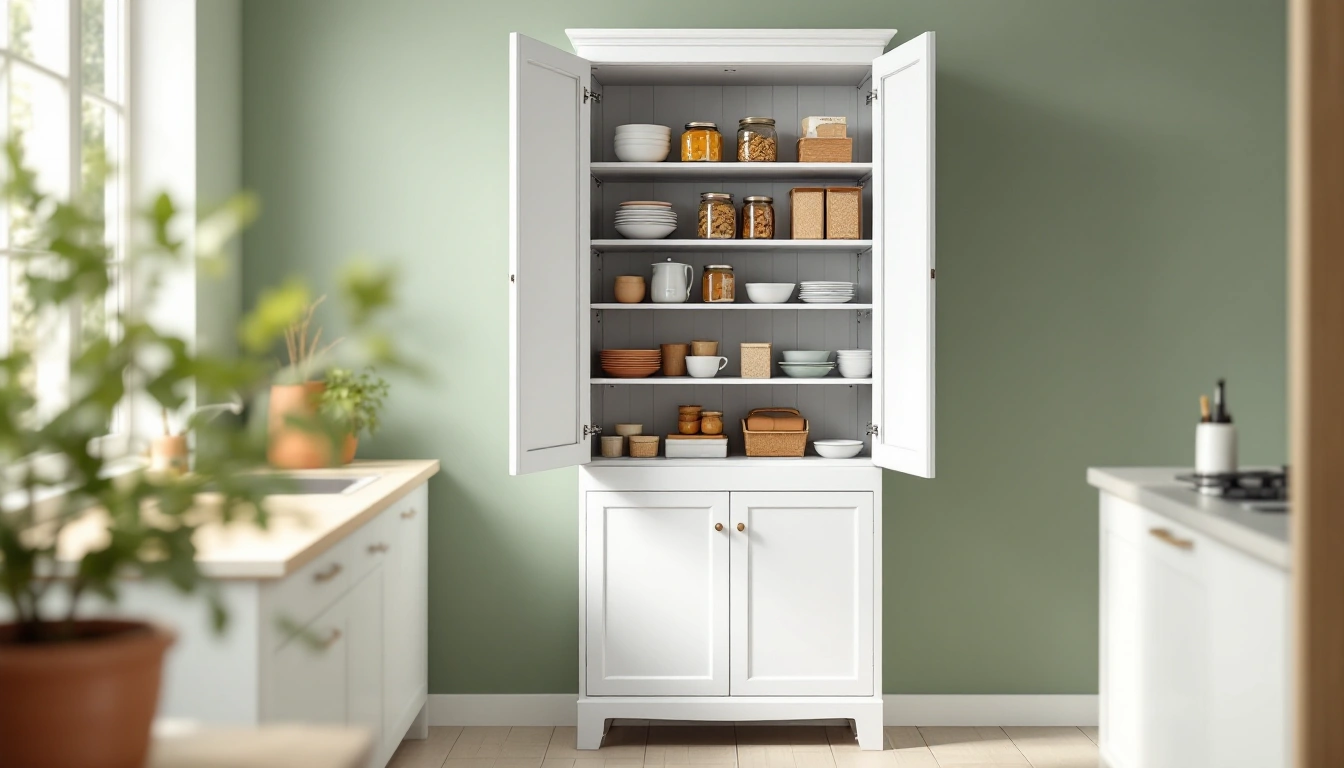
The short answer
For most kitchens, a freestanding pantry cabinet like the Sauder Select adds the most enclosed storage per square foot. Choose wire shelving instead for heavy bulk goods, or a cart or island when you need counter space as much as storage.
Last updated October 2026
Contents18
- #1. Sauder Select Storage Cabinet: best all-around pantry cabinet
- #2. VASAGLE Tall Pantry Cabinet with Drawer: best pantry cabinet with a drawer
- #3. SISESOL 75 in Metal Pantry Cabinet: best tall metal pantry cabinet
- #4. VEVOR 68.9 in Steel Storage Cabinet: best lower steel cabinet
- #5. Seville Classics UltraDurable 5-Tier Wire Shelving: best heavy-duty wire shelving
- #6. HOMCOM 44 in Kitchen Island Cart: best kitchen island for storage
- #7. HOMCOM 32.75 in Kitchen Island Cart: best compact enclosed cart
- #8. Seville Classics 3-Tier UltraDurable Utility Cart: best rolling utility cart
- Factors to consider when choosing a kitchen storage cabinet
- How to pick between the three types
- Assembly and delivery, briefly
- Common mistakes with kitchen storage cabinets
- Materials and durability across the three types
- What "capacity" actually means
- Real-world scenarios
- How we picked these kitchen storage cabinets
- Measuring before you buy
- More in this guide
Our top 8 picks
- 1Best all-around pantry cabinet
 Sauder Select Storage Cabinet
- Double-door cabinet with four adjustable shelves
- Measures 29.69 by 16.34 by 70.87 inches
- White finish suits a pantry or craft room
- 2Best pantry cabinet with a drawer
 VASAGLE Tall Pantry Cabinet with Drawer
- Two cabinets, six door shelves and one slide-out drawer
- Four adjustable shelves hold up to 60 pounds each
- Made from MDF with three hinges per door
- 3Best tall metal pantry cabinet
 SISESOL 75 in Metal Pantry Cabinet
- 75 inches tall with two doors and five shelves
- Shelves adjust to fit short and tall items
- Magnetic doors keep the cabinet closed
- 4Best lower steel cabinet
 VEVOR 68.9 in Steel Storage Cabinet
- Steel body with two doors and a three-point lock
- Four adjustable shelves make five storage levels
- Measures 31.5 inches wide by 15.7 deep by 68.9 tall
- 5Best heavy-duty wire shelving
 Seville Classics UltraDurable 5-Tier Wire Shelving
- Five shelves adjustable in one inch increments
- Measures 24 by 18 by 75 inches with wheels
- Holds up to 800 pounds per shelf on leveling feet
- 6Best kitchen island for storage
 HOMCOM 44 in Kitchen Island Cart
- Rubberwood countertop over an MDF frame
- Two drawers, two double-door cabinets, a spice rack and a towel bar
- Shelves lock into three height levels
- 7Best compact enclosed cart
 HOMCOM 32.75 in Kitchen Island Cart
- Rubberwood top over an MDF frame
- One drawer and a cabinet with an adjustable shelf
- Four swivel casters, two with brakes; towel rail doubles as a handle
- 8Best rolling utility cart
 Seville Classics 3-Tier UltraDurable Utility Cart
- Three steel wire shelves adjust in one-inch steps
- Measures about 36 inches wide by 18 deep by 32 tall
- Holds up to 500 pounds evenly distributed across the cart
Kitchen storage cabinets cover more ground than the name suggests. Some are tall pantry boxes built for food. Some are open wire shelving built for heavy loads. Others are rolling carts and islands that trade some storage for a work surface. Picking the wrong type is the most common shopping mistake.
This guide sorts eight real picks by the job each one does best.
#1. Sauder Select Storage Cabinet: best all-around pantry cabinet
Our verdict:
Best all-around pantry cabinet
Best for a kitchen or utility room that needs a straightforward, doored cabinet with room to adjust.
View on Amazon- Double-door cabinet with four adjustable shelves
- Measures 29.69 by 16.34 by 70.87 inches
- White finish suits a pantry or craft room
- Backed by a 5 year limited warranty
Keep in mind: it is sized more like a general storage cabinet than a deep, food-specific pantry.
Product details checked September 2026
This double-door cabinet has 4 adjustable shelves, so you can space them for cans and boxes or spread them out for bulkier items. At 70.87 inches tall on a 29.69 by 16.34 inch base, it fits against most kitchen walls without eating the whole room. The white finish keeps it from standing out as extra furniture.
#2. VASAGLE Tall Pantry Cabinet with Drawer: best pantry cabinet with a drawer
VASAGLE Tall Pantry Cabinet with Drawer
Our verdict:
Best pantry cabinet with a drawer
Best for households that want a slide-out drawer for loose items alongside shelved food storage.
View on Amazon- Two cabinets, six door shelves and one slide-out drawer
- Four adjustable shelves hold up to 60 pounds each
- Made from MDF with three hinges per door
- Includes an anti-tip kit for wall mounting
Keep in mind: the shallow door shelves, at 2.4 to 3.9 inches deep, only suit small jars and spice bottles.
Product details checked September 2026
Two cabinets, a slide-out drawer, and 6 door shelves give this cabinet several distinct storage zones instead of one big shelf stack. The 4 main shelves adjust to 3 heights and hold up to 60 lbs. each. An anti-tip kit is included, which matters given the tall, narrow shape.
#3. SISESOL 75 in Metal Pantry Cabinet: best tall metal pantry cabinet
SISESOL 75 in Metal Pantry Cabinet
Our verdict:
Best tall metal pantry cabinet
Best for a kitchen that wants maximum shelf count and a sturdier steel body than particleboard.
View on Amazon- 75 inches tall with two doors and five shelves
- Shelves adjust to fit short and tall items
- Magnetic doors keep the cabinet closed
- Powder-coated steel holds up to 120 pounds per shelf
Keep in mind: at 75 inches, it needs real ceiling clearance and a level floor to sit flush.
Product details checked September 2026
Five adjustable shelves inside a powder-coated steel frame hold up to 120 lbs. each, well above what a wood cabinet in this price range usually rates. The magnetic doors close without a separate latch, and an anti-tip kit is included for securing it to the wall.
#4. VEVOR 68.9 in Steel Storage Cabinet: best lower steel cabinet
VEVOR 68.9 in Steel Storage Cabinet
Our verdict:
Best lower steel cabinet
Best for a kitchen with room for a 31.5-inch-wide steel cabinet and adjustable shelves.
View on Amazon- Steel body with two doors and a three-point lock
- Four adjustable shelves make five storage levels
- Measures 31.5 inches wide by 15.7 deep by 68.9 tall
- Maker rates each shelf for 120 pounds; wall anchoring is required
Keep in mind: it is 15.7 inches deep and needs wall anchoring; it will not fit a 24-inch-wide gap.
Product details checked October 2026
This steel cabinet is 68.9 inches tall, 31.5 wide and 15.7 deep. Four adjustable shelves form five storage levels behind two doors. VEVOR rates each shelf for 120 pounds and specifies wall anchoring before use.
Its three-point lock is useful if you need to restrict access. The trade-off is floor space: measure the doors open as well as the cabinet closed. Choose a smaller piece if it would block the kitchen walkway.
#5. Seville Classics UltraDurable 5-Tier Wire Shelving: best heavy-duty wire shelving
Seville Classics UltraDurable 5-Tier Wire Shelving
Our verdict:
Best heavy-duty wire shelving
Best for bulk pantry goods, stockpots, or small appliances that are too heavy for a standard cabinet shelf.
View on Amazon- Five shelves adjustable in one inch increments
- Measures 24 by 18 by 75 inches with wheels
- Holds up to 800 pounds per shelf on leveling feet
- NSF certified steel construction
Keep in mind: the open wire design leaves everything on it visible and exposed to dust.
Product details checked September 2026
NSF-certified for commercial use, this rack holds up to 800 lbs. per shelf on its leveling feet, or 500 lbs. total on its wheels. The 5 shelves adjust in 1 inch increments, and it comes with both wheels for moving it and leveling feet for parking it in place.
#6. HOMCOM 44 in Kitchen Island Cart: best kitchen island for storage
HOMCOM 44 in Kitchen Island Cart
Our verdict:
Best kitchen island for storage
Best for a kitchen that wants an island with real enclosed storage, not just an open shelf.
View on Amazon- Rubberwood countertop over an MDF frame
- Two drawers, two double-door cabinets, a spice rack and a towel bar
- Shelves lock into three height levels
- Four caster wheels with two locking brakes, capacity 100 pounds
Keep in mind: its 100 lb. weight capacity is modest for a piece this size.
Product details checked September 2026
This island pairs a varnished rubberwood countertop with 2 drawers, 2 double-door cabinets, a spice rack, and a towel bar. Adjustable shelves lock into 3 height settings inside the cabinets, and 4 swivel casters, 2 with locking brakes, let you move it or park it in place.
#7. HOMCOM 32.75 in Kitchen Island Cart: best compact enclosed cart
HOMCOM 32.75 in Kitchen Island Cart
Our verdict:
Best compact enclosed cart
Best for a kitchen that wants a wood worktop and hidden storage in a smaller cart.
View on Amazon- Rubberwood top over an MDF frame
- One drawer and a cabinet with an adjustable shelf
- Four swivel casters, two with brakes; towel rail doubles as a handle
- Measures 32.75 inches wide by 17.75 deep by 36 tall
Keep in mind: it has one drawer and no open storage shelf; measure space for the cabinet doors too.
Product details checked October 2026
A rubberwood top sits over one drawer and a double-door cabinet. The inner shelf has three height settings. Four swivel casters, two with brakes, let you park the cart for use or move it for cleaning.
At 32.75 inches wide and 17.75 deep, it takes less floor width than the larger islands here. It has an MDF frame, so keep spills from sitting against the base.
#8. Seville Classics 3-Tier UltraDurable Utility Cart: best rolling utility cart
Seville Classics 3-Tier UltraDurable Utility Cart
Our verdict:
Best rolling utility cart
Best for anyone who wants a cart they can see the contents of at a glance and load heavily.
View on Amazon- Three steel wire shelves adjust in one-inch steps
- Measures about 36 inches wide by 18 deep by 32 tall
- Holds up to 500 pounds evenly distributed across the cart
- Four-inch wheels, two locking; NSF certified for dry environments
Keep in mind: it has no doors or drawers, so everything on it stays visible.
Product details checked October 2026
This steel-wire cart holds up to 500 lbs. in total across three open shelves. The shelves adjust in one-inch steps, and four-inch wheels include two brakes. With its handle, the maker lists a 35.9-inch width, 18-inch depth and 32.2-inch height.
It is NSF certified for dry environments and needs no tools to assemble. Leave enough room for the handle and a clear path before loading it.
Factors to consider when choosing a kitchen storage cabinet
Capacity versus footprint
A tall pantry cabinet stores the most per square foot of floor space, since it needs only a wall, not clearance on every side. A cart or island needs walking room around it but adds a work surface a cabinet cannot. Decide which one your kitchen is actually short on before comparing models.
Shelf adjustability
Fixed shelf spacing wastes height above short items like spice jars. Look for shelves that adjust in small increments, or at least across a few preset heights, so you can match the spacing to what you actually store.
Weight rating
Check the per-shelf weight rating, not just the total. The SISESOL cabinet rates each shelf at 120 lbs., and VEVOR rates each shelf of its steel cabinet for 120 lbs. too. A wire rack rated in the hundreds of pounds per shelf suits stockpots and bulk goods better than either.
Stability
Tall, narrow cabinets are top-heavy once loaded. Use the anti-tip kit or wall anchor that comes with the cabinet, especially in a home with kids or pets nearby.
How to pick between the three types
Start with what is actually missing in your kitchen, not with a product category. If you are short on places to put food and dry goods, a pantry cabinet wins on pure volume. If you are short on room for heavy or bulky items, open wire shelving with adjustable shelves handles that better. If your real problem is a lack of counter or prep space, a cart or island is the only type of the three that fixes it.
Floor space matters too. A pantry cabinet needs its own stretch of wall, and it stays put once it is loaded. A cart can roll out for a project and back into a corner afterward. That matters in a kitchen too small to give up floor space for good.
Assembly and delivery, briefly
Almost everything on this page ships flat and needs some assembly. The wire shelving and Seville Classics cart need assembly; check the exact instructions and included tools before you start. The SISESOL cabinet's listing puts assembly at about 30 minutes.
The wood cabinets and islands take longer, since they have doors and drawers to fit. If assembly time is a real concern, weigh it along with capacity, not as an afterthought once the box arrives. A tall cabinet is also easier to build lying down and then tilt upright, so leave room for that.
Common mistakes with kitchen storage cabinets
The most common mistake is buying for the room's total size instead of the clearance left once the piece is in place. A cabinet or island that fits on paper can still make a kitchen feel cramped if it does not leave a real walkway.
The second mistake is buying for capacity alone without checking whether the shelves adjust. A cabinet with fixed shelves spaced for cereal boxes wastes space if you mostly store cans or spice jars.
The third is skipping the wall anchor on a tall cabinet. It matters more once the shelves are loaded than it does on the day you build it.
Materials and durability across the three types
The wood cabinets here are engineered wood. The VASAGLE is MDF, which is less forgiving of steady moisture than solid wood. Avoid a spot right beside the sink or a dishwasher vent. The VEVOR cabinet has a steel body; check its weight and arrange help before moving or anchoring it.
The SISESOL cabinet is powder-coated steel, which is why it can rate each shelf at 120 lbs. The Seville Classics shelving and cart also use steel wire. Steel gives up a little warmth in looks for real strength.
The islands sit in between. The HOMCOM pairs a varnished rubberwood top with an MDF frame, and the compact HOMCOM cart also has a rubberwood top over an MDF frame. A wood or steel top holds up to daily prep better than a thin laminate surface.
What "capacity" actually means
It is tempting to compare cabinets by height alone. Shelf count and how the weight is rated change the real answer more. A tall cabinet with 3 shelves spaced far apart holds fewer items than one the same height with 5 closer shelves. When two cabinets are close in height, compare how many shelves each has and whether they adjust.
Weight ratings need the same care. The Seville Classics 5-tier shelving holds up to 800 lbs. per shelf on its leveling feet, but only 500 lbs. for the whole unit once it is on wheels.
The VEVOR steel cabinet lists 120 lbs. per shelf, with 600 lbs. across the cabinet. Read whether a number is per shelf or total before you plan what goes where.
Real-world scenarios
A studio or small apartment with no pantry at all. One freestanding pantry cabinet sized to your narrowest free wall usually fixes this faster than reorganizing full cabinets. The VEVOR steel cabinet needs 31.5 inches of width and 15.7 inches of depth. It suits a broader free wall, but it will not fit a 24-inch gap. Measure the wall first, since apartment kitchens often have less usable wall than the floor plan suggests. Our small kitchen storage cabinet picks cover more options for tight gaps.
A rental where you cannot install anything. Every pick on this page is freestanding, so there is no drilling into cabinets and it all moves with you. A rolling cart like the Seville Classics 3-tier is the easiest to take along. The one exception is the wall anchor on a tall cabinet: a small screw hole is worth it for safety, and it patches easily at move-out.
A family kitchen short on both storage and counter space. This is where an island earns its place over a plain cabinet, since it solves two problems at once. The HOMCOM island adds 2 drawers and 2 double-door cabinets under a 43.75-inch-wide top, if the floor space is really there.
A kitchen with bulky small appliances and nowhere to put them. A stand mixer or a large slow cooker often will not fit standard shelf spacing. A cabinet with adjustable shelves and a high per-shelf rating, like the SISESOL, handles this best. Our kitchen appliance storage picks go deeper on this problem.
How we picked these kitchen storage cabinets
We looked for models that cover the three real jobs kitchen storage does: holding food and dry goods, handling heavy or bulky items, and adding counter space where a kitchen is short on it. We did not test these products by hand. Details come from each listing, so check the current page before you buy.
Measuring before you buy
Every cabinet, cart, and island here is freestanding, so none of them need plumbing or an electrician. Still, measure your actual wall space or floor footprint first. For a tall cabinet, check ceiling clearance too, especially for a 70 inch or taller unit like the Sauder Select or SISESOL cabinet. For a cart or island, leave at least 36 inches of open walkway on any side that will not back onto a wall. That matches the National Kitchen and Bath Association (NKBA) planning guideline for a walkway.
More in this guide
- Kitchen Storage: A Primer on the Main Categories: an overview of the main storage types, from cabinets to containers.
- 6 Best Pantry Kitchen Storage Cabinets: pantry-specific cabinets compared by size and price.
- Kitchen appliance storage cabinets and racks: five picks for appliances that do not fit standard cabinets.
- 5 Best Kitchen Cabinet Storage Organizers: add-on organizers for the cabinets you already have.
- 4 Best Kitchen Countertop Storage Picks: compact carts and containers that stay on the counter.
- 4 Best Kitchen Food Storage Containers: airtight container systems for pantry goods.
- 3 Best Kitchen Islands with Storage and Seating: islands built with stools included.
- 5 Best Kitchen Islands with Storage: storage-first islands without seating.
- 5 Best Kitchen Storage Cabinets with Doors and Shelves: enclosed cabinets compared to open shelving.
- 4 Best Kitchen Storage Carts: rolling carts sorted by mobility and capacity.
- 4 Best Kitchen Storage Islands: when an island beats a cabinet or a cart.
- 5 Best Kitchen Storage Racks: open wire and steel racks for heavy loads.
- 4 Best Kitchen Storage Shelves: wood and steel shelving units compared.
- 5 Best Kitchen Storage Solutions: matching your specific storage problem to the right fix.
Our picks in this topic
5 picks
5 Best Kitchen Appliance Storage Cabinets and Racks in 2026
Five kitchen appliance storage picks: a microwave cabinet, a rack with outlets, two tall pantry cabinets and an open baker's rack.
5 picks
5 Best Kitchen Cabinet Storage Organizers in 2026
Add-on shelves, turntables, and pull-out baskets that get more usable space out of the cabinets you already have.
4 picks
4 Best Kitchen Countertop Storage Picks in 2026
Airtight canisters and add-on shelves that organize counter and cabinet space without adding floor furniture.
4 picks
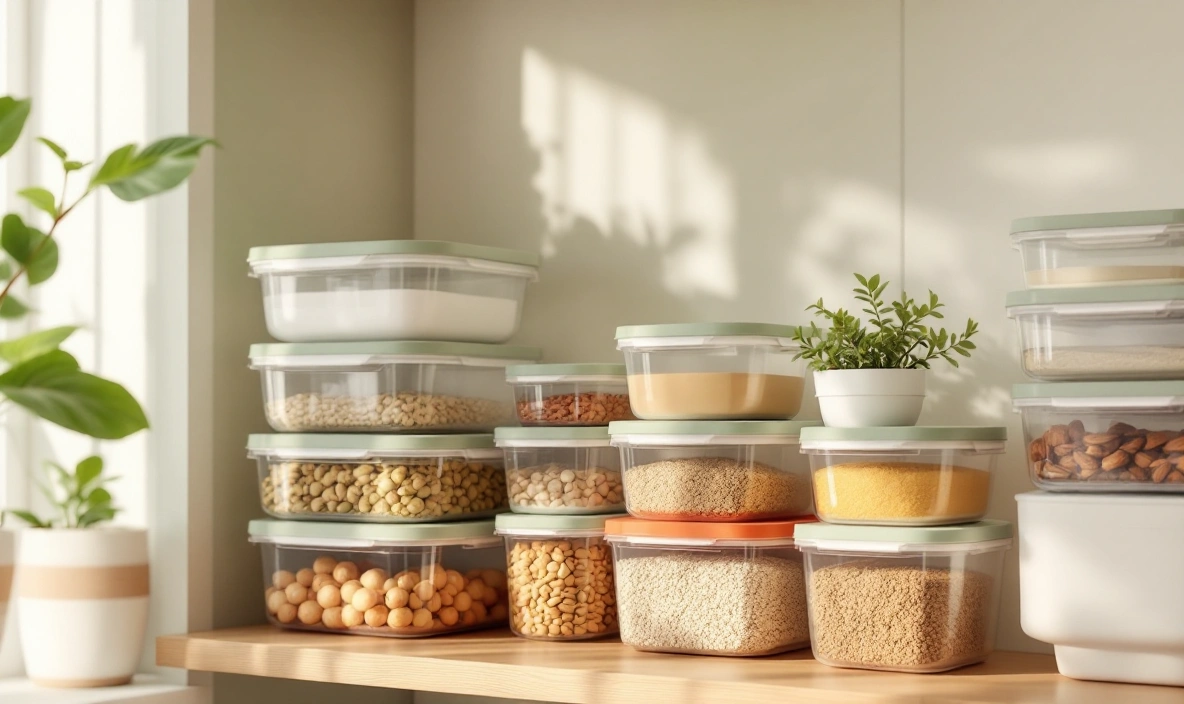
4 Best Kitchen Food Storage Containers in 2026
Airtight pantry containers compared on seal type, stacking, and set size, for building a fresher, tidier pantry shelf.
5 picks
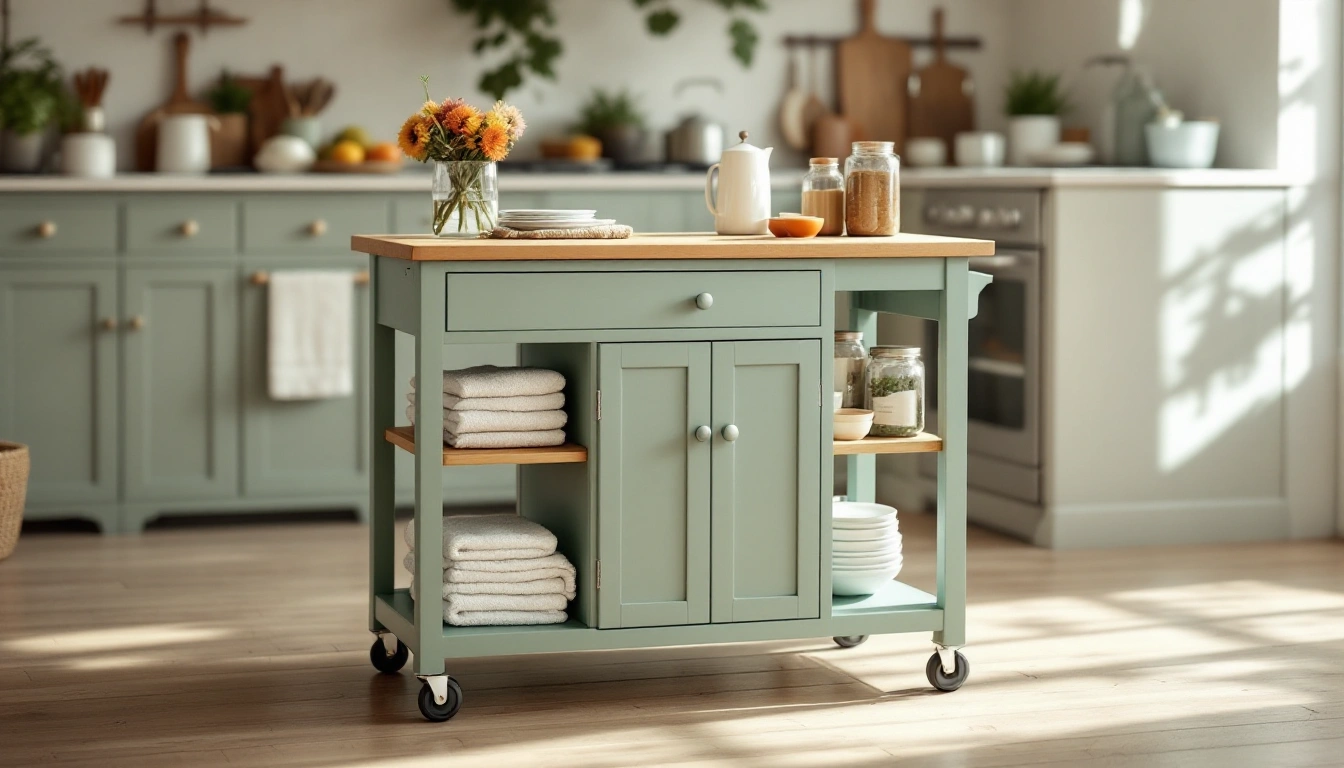
5 Best Kitchen Islands with Storage in 2026
Storage-first kitchen islands compared on capacity, footprint, and mobility, without assuming you need seating.
3 picks
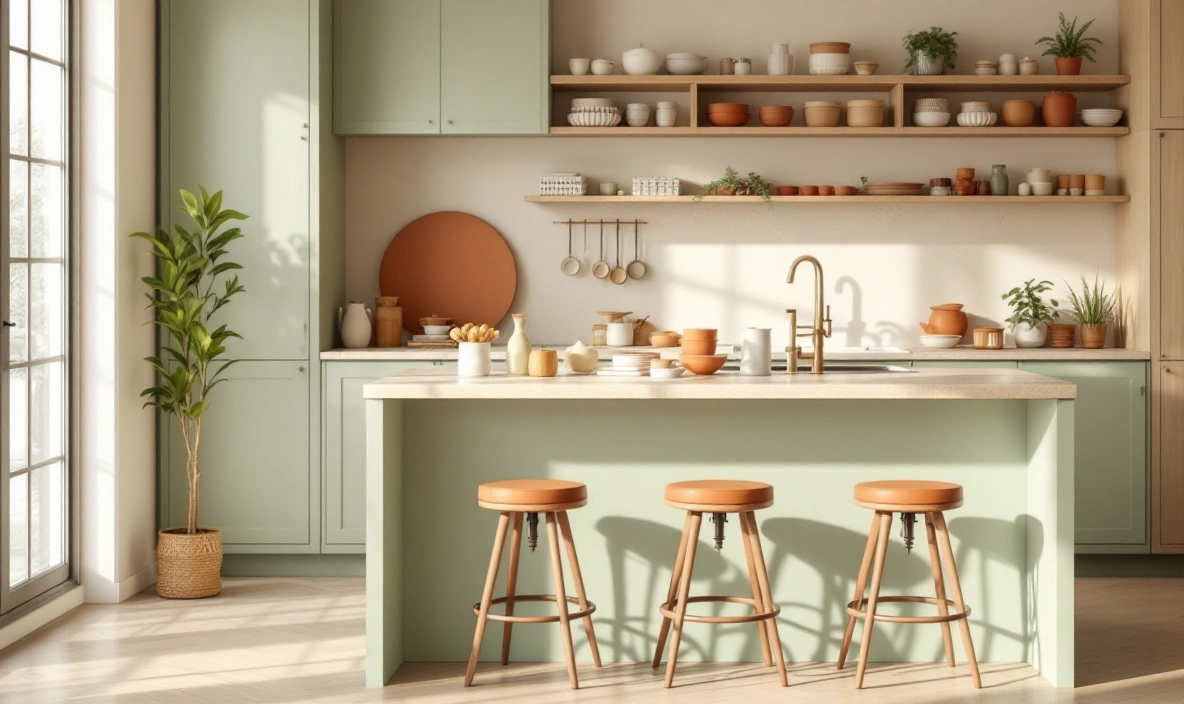
3 Best Kitchen Islands with Storage and Seating in 2026
Kitchen islands that come with stools included and confirmed, instead of a counter you have to hope stools will fit under.
4 picks
4 Best Kitchen Storage Picks in 2026
One pick from each main kitchen storage category, cabinets, shelving, carts, and containers, to help you narrow down what you need.
5 picks
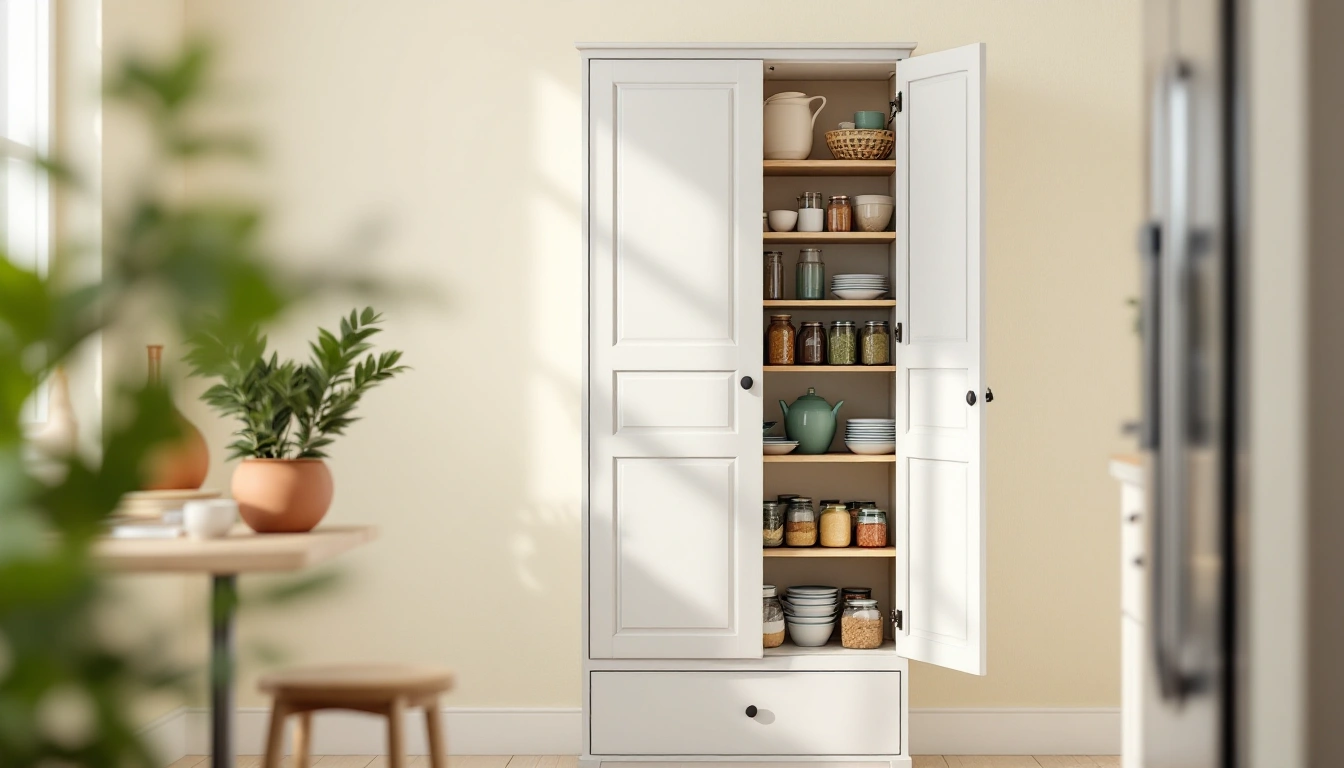
5 Best Kitchen Storage Cabinets with Doors and Shelves in 2026
Enclosed pantry cabinets with adjustable shelving, compared by height, shelf count, and per-shelf weight rating.
4 picks
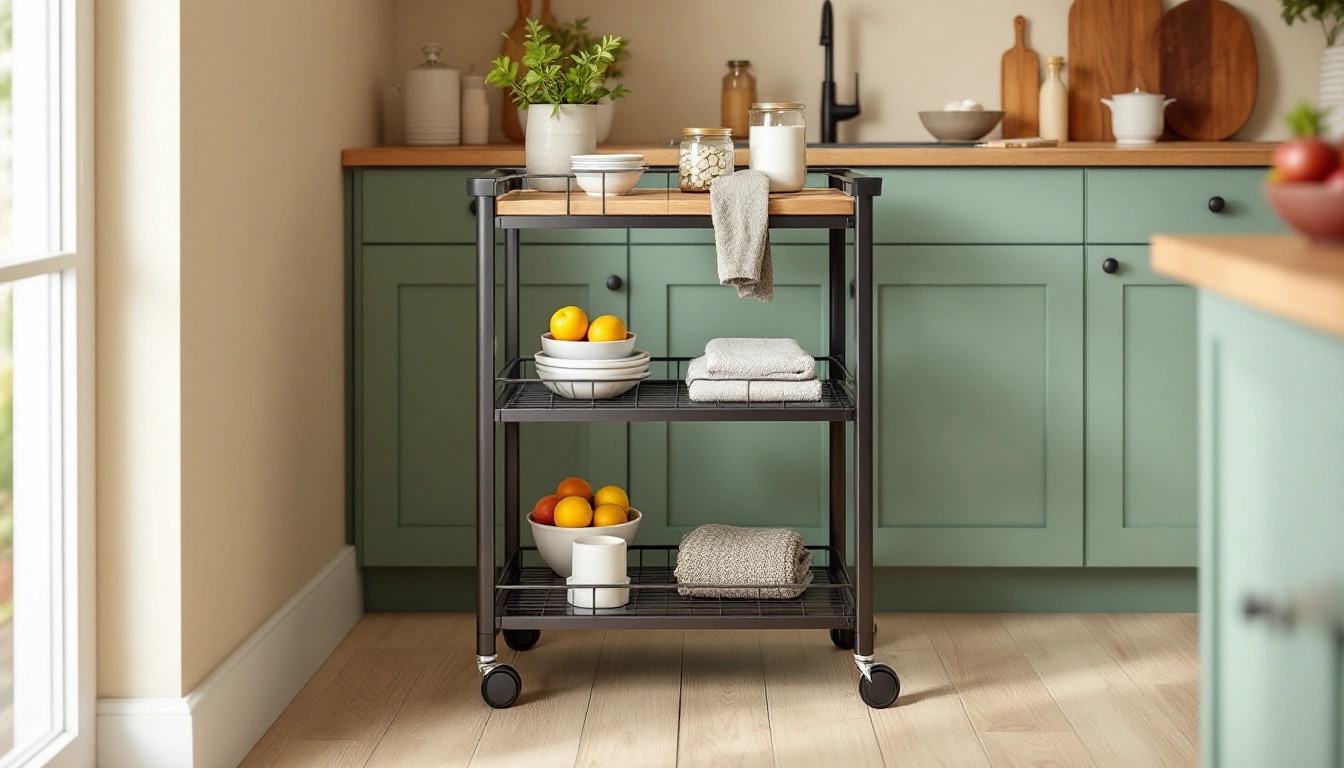
4 Best Kitchen Storage Carts in 2026
Rolling kitchen carts compared on mobility, capacity, and whether they fold away when you don't need them.
4 picks
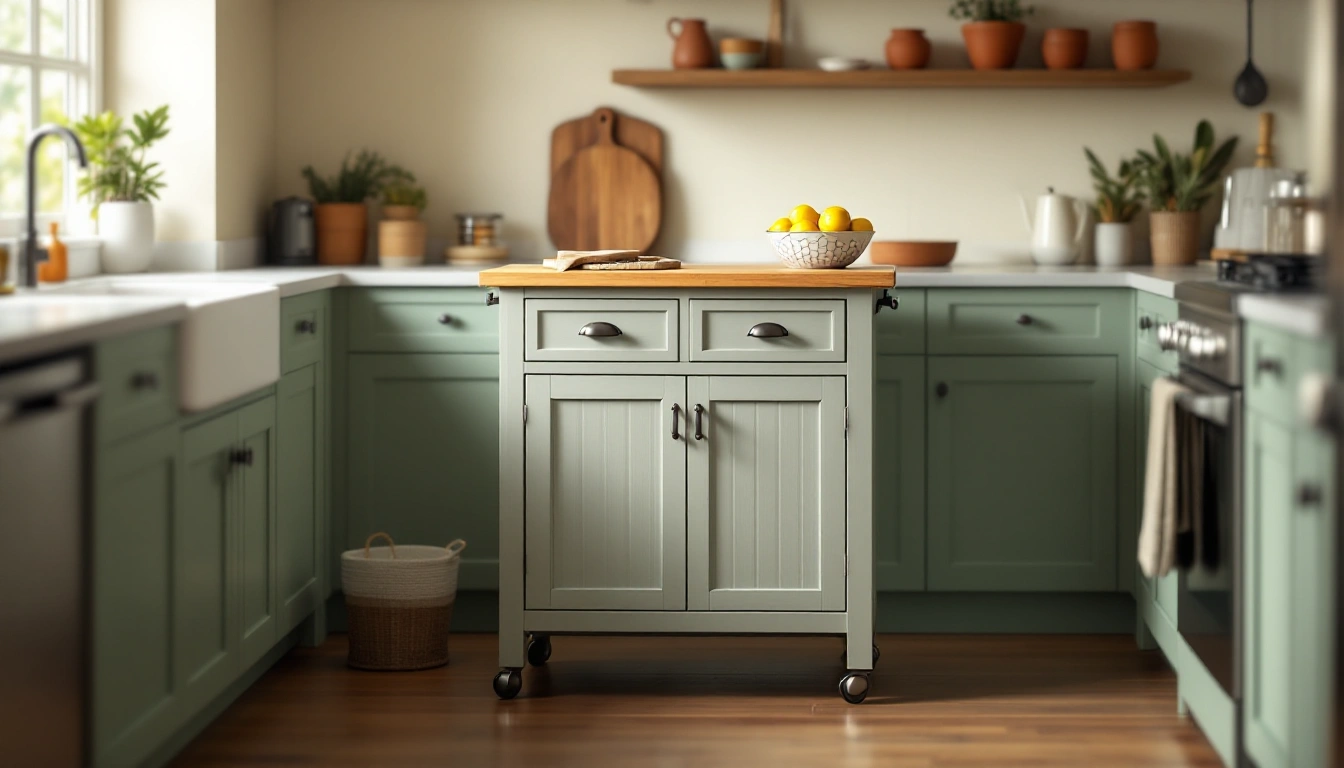
4 Best Kitchen Storage Islands in 2026
When a storage-focused island earns its floor space, and which models deliver the most for a kitchen that has the room.
5 picks
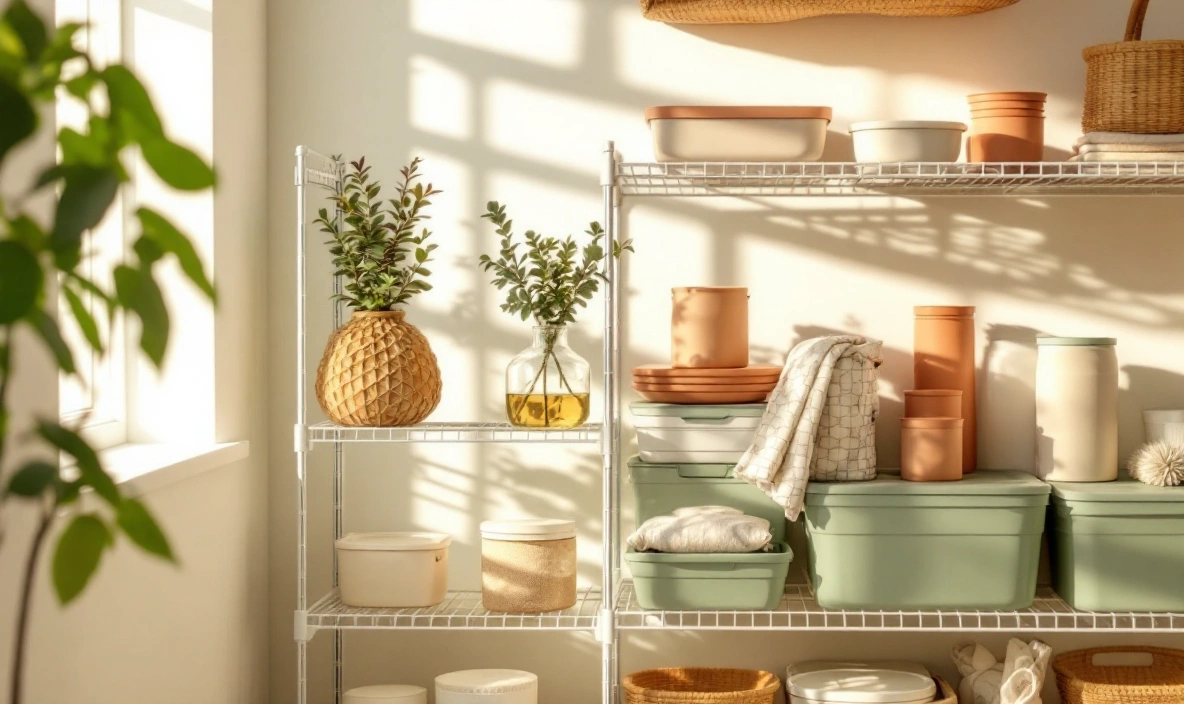
5 Best Kitchen Storage Racks in 2026
Open wire and steel racks for kitchen storage, compared on weight capacity, adjustability, and mobility.
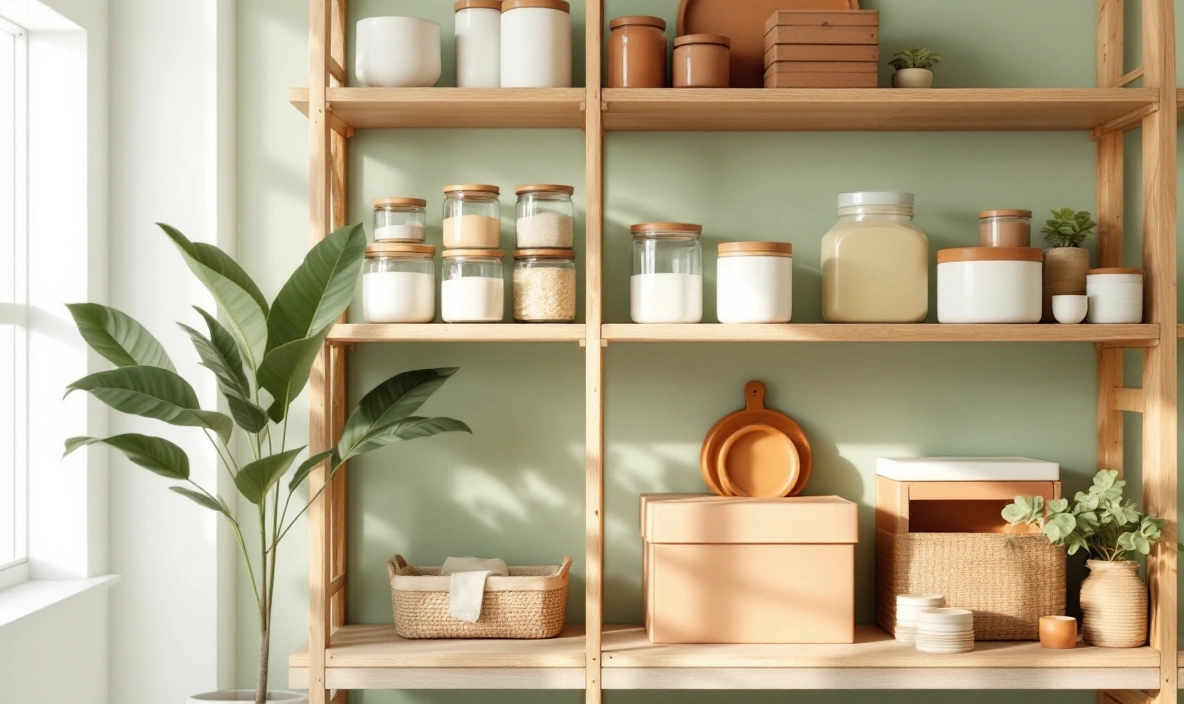
4 picks
4 Best Kitchen Storage Shelves in 2026
Bamboo and steel shelving units for kitchen storage, compared on look, per-shelf capacity, and setup.
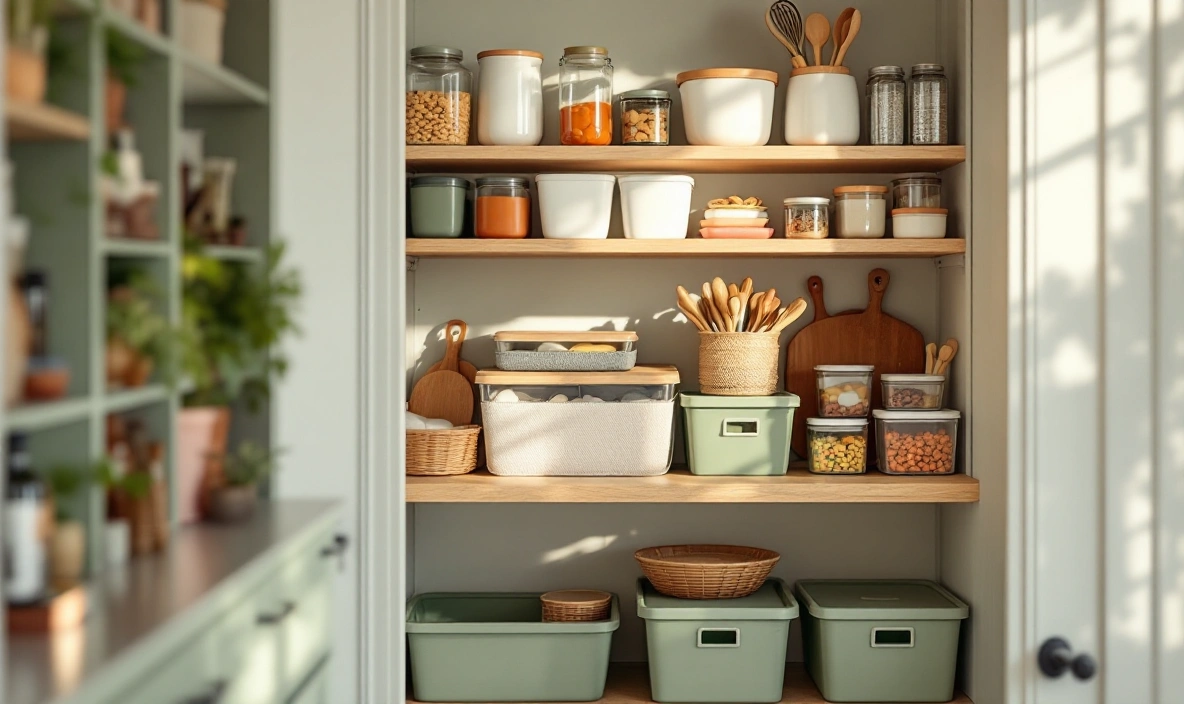
5 picks
5 Best Kitchen Storage Solutions in 2026
Five kitchen storage products matched to five common problems, from too little pantry space to a cluttered cabinet corner.
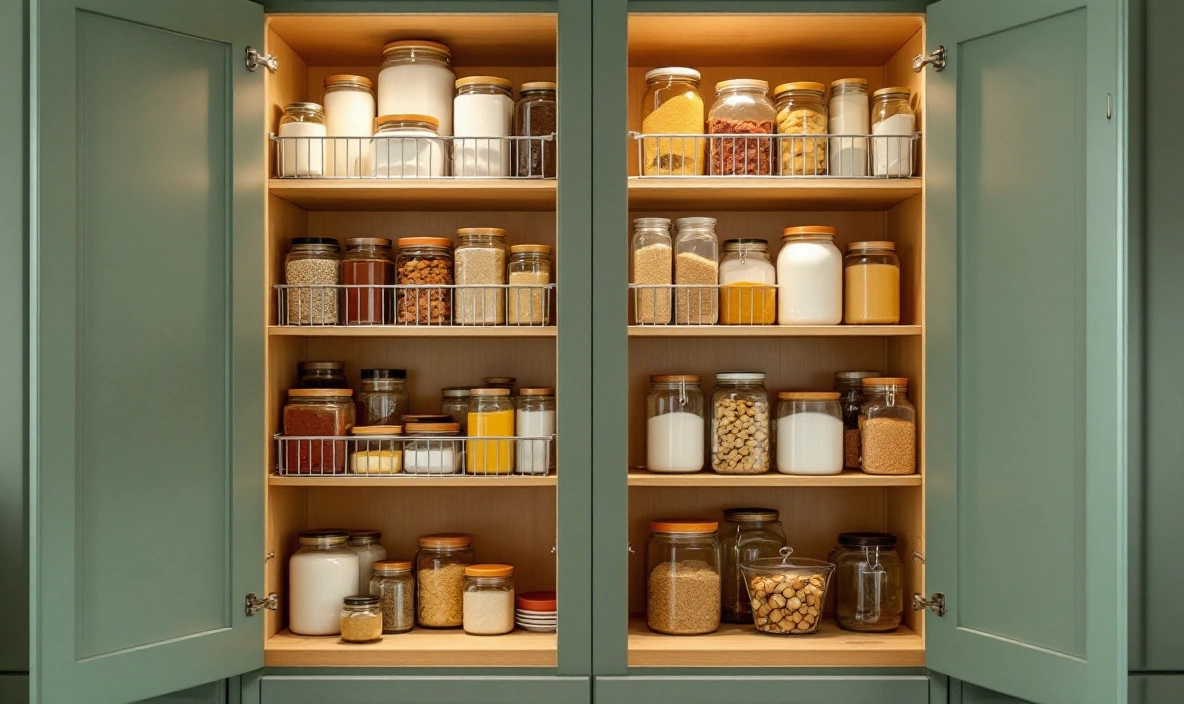
6 picks
6 Best Pantry Kitchen Storage Cabinets in 2026
Freestanding pantry cabinets compared by height, shelf count, and price, from a budget option to a tall metal cabinet.
Questions people also ask
What's the difference between a pantry cabinet and a utility cart?
A pantry cabinet is a tall, doored box built to hold food and kitchen goods out of sight. A cart rolls, usually has open shelves, and adds a work surface on top. Pick a cabinet for capacity and a cart for a surface plus mobility.
Do storage cabinets need to be attached to the wall?
Most tall, narrow pantry cabinets are top-heavy once loaded. Check the listing for an anti-tip kit or wall anchor, and use it, especially in a home with kids or pets.
Is a cart or island a real substitute for a cabinet?
Not fully. A cart or island stores less per square foot than a tall cabinet, since its shelves are shorter and often open. It earns its place by adding counter space, not by matching a cabinet's capacity.
How much weight can a freestanding pantry cabinet hold?
It depends on the model, and some listings rate the whole cabinet while others rate each shelf. VEVOR rates each shelf of its 68.9 in steel cabinet for 120 lbs., with 600 lbs. across the cabinet. SISESOL also rates each of its five shelves at 120 lbs.