
Small Kitchen Storage Ideas
Small kitchen storage ideas that start with your biggest problem, not a Pinterest board: where to put pans, how to use dead corners, and which organizers earn their space.
Last updated September 2026
Contents13
- Small kitchen storage ideas start with vertical space
- Drawers need dividers that match the drawer, not a category
- Corners and dead space are worth the extra ten minutes
- Work from your worst spot outward
- Go zone by zone once you've fixed your worst spot
- How to measure before you buy anything
- Renter-friendly small kitchen storage ideas with no drilling
- Common mistakes that undo an organizing pass
- Rotate seasonal and occasional items out of prime real estate
- Vertical wall space counts too
- When to fix your existing storage vs. add new pieces
- Revisit after a few weeks
- Who this guide is for
Most small kitchens don't need more storage. They need small kitchen storage ideas that fix what they already have. Start with the one cabinet or drawer that annoys you every time you cook. Fix that spot first. Use what you learn there on the rest of the kitchen.
Small kitchen storage ideas start with vertical space
Small kitchens waste more vertical space than any other kind. Look at the gap between a shelf and the food sitting on it. In most cabinets that's 4 to 6 inches of wasted height.
A stackable shelf or a tension-mounted shelf splits that gap into two levels. No cutting or drilling needed. Try this in your pantry, your under-sink cabinet, and any spot where cans or boxes sit with empty air above them.
Drawers need dividers that match the drawer, not a category
A junk drawer isn't messy because you own too much. It's messy because nothing inside it has its own spot. Drawer dividers only work when they fit the drawer's actual inside width. Measure before you buy anything.
A divider that's a half-inch too wide won't sit flat. One that's too narrow slides around and stops doing its job within a week.
Corners and dead space are worth the extra ten minutes
The corner where two counters meet, and the space behind a cabinet door, are the two spots small kitchens waste most often. A lazy Susan or a door-mounted rack turns both into real storage. It takes longer to install than a shelf, which is why most people skip it. It's also the fix that makes the biggest visible difference in a kitchen under 100 square feet.
Work from your worst spot outward
Fix the drawer or cabinet that bothers you most first. Notice what fit, what didn't, and what you actually reach for. Use that on the next spot. A kitchen island, a set of drawer organizers, or a full cabinet reorganization all work better once you know your kitchen's real dimensions and habits. Don't just copy a layout built for a bigger room.
Go zone by zone once you've fixed your worst spot
A full small-kitchen storage pass works best in zones, tackled one at a time. Trying to fix the whole kitchen in one afternoon usually backfires. Everything ends up on the counter, and you run out of energy before it's all put back.
Under the sink. This is one of the most wasted spots in a small kitchen. It's an odd-shaped cavity around plumbing that people give up on and pile bottles into.
A tension rod mounted a few inches below the sink basin gives spray bottles a hanging spot. That frees the floor for taller items. A slide-out tray underneath catches drips. It also means you're not unstacking three things to reach the trash bags at the back.
Above the fridge. This cabinet is usually the hardest to reach in the kitchen. That makes it the right spot for things you use rarely: the turkey roaster, the good serving platters, the extra vase. Don't waste that hard-to-reach space on things you need weekly. That's a design decision, not a storage product.
The pantry, if you have one. Deep pantry shelves lose items to the back constantly. Turntables for canned goods and spice jars help. So do shallow bins you can pull forward as a unit instead of reaching into the dark.
Counter appliances. Every appliance living permanently on the counter is square footage you can't get back. If something gets used less than twice a week, store it in a cabinet instead. Keep a step stool nearby if it needs to go on a top shelf.
Spice storage. Spices are small, numerous, and easy to lose track of. Keep them together, near the stove. Pick a container that fits your actual cabinet or drawer depth, not one that just looks nice in a photo.
How to measure before you buy anything
Every fix on this page depends on one habit: measuring before buying. For a cabinet, measure the inside width, depth and height at the narrowest point. Many cabinets taper slightly near hinges or plumbing. That narrowest point is what actually limits a shelf or organizer.
For a drawer, measure the inside width and the clear depth once it's fully open. A divider that's slightly too deep will catch on the runners. Write the numbers down before you shop. It's easy to forget them between the kitchen and the checkout page.
Renter-friendly small kitchen storage ideas with no drilling
If you can't modify cabinets or walls, several of these fixes still work. Tension rods, stacking shelves, and adhesive-backed hooks all install without drilling. They come back out cleanly at move-out too.
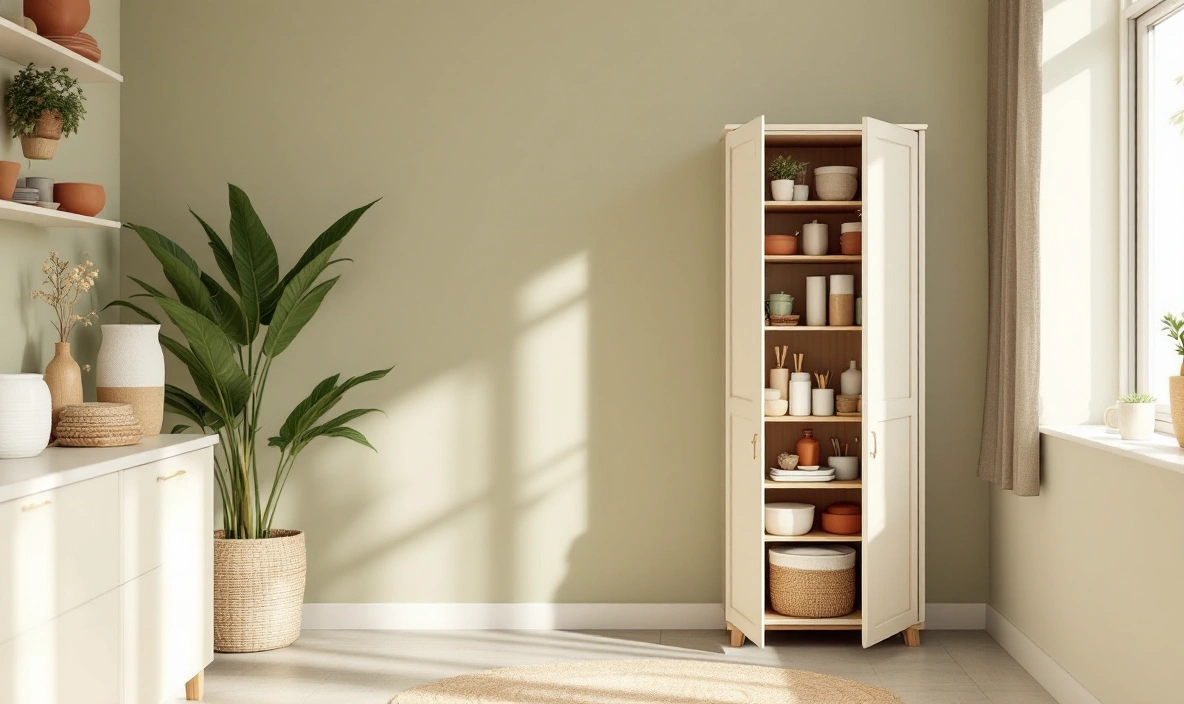
A freestanding narrow cabinet works well in a rental, where a built-in pull-out shelf isn't an option. Our small kitchen storage cabinet picks compare five that fit a tight gap, from a 12-inch-deep pantry to tall cabinets with pull-outs. Command-style hooks rated for kitchen use can hold light items like measuring cups or oven mitts on a cabinet door. That uses space that's otherwise wasted.
Common mistakes that undo an organizing pass
The most common mistake is buying organizers before measuring. That leads to a drawer divider or shelf that doesn't fit and ends up unused in a closet. The second mistake is organizing by strict category instead of how you actually cook.
Grouping "all baking tools" together sounds tidy. It works poorly if your baking tools are split across two work areas in daily use. The third mistake is trying to do the whole kitchen at once instead of zone by zone. That tends to end in a half-finished project and a counter full of displaced items.
Rotate seasonal and occasional items out of prime real estate
Save your best storage, eye-level shelves, the drawer nearest the stove, the cabinet you can reach without bending, for things you use weekly. The turkey roaster, the fondue set, the extra mugs for holiday guests: these can live somewhere less convenient. A hall closet or a high garage shelf works fine. Bring them in only when you need them. Freeing that prime real estate from occasional-use items is often worth more than adding another organizer.
Vertical wall space counts too
Storage doesn't have to live inside a cabinet. A wall-mounted rail with S-hooks near the stove can hold pans or utensils that would otherwise crowd a drawer. A magnetic strip near your cutting board keeps knives within reach without a bulky block on the counter. These work especially well in a galley kitchen, where the walls beside the walkway are otherwise doing nothing.
When to fix your existing storage vs. add new pieces
Not every storage problem needs a new purchase. Before adding a cabinet or a set of organizers, ask a simple question. Is the real issue too much stuff you don't use, not too little space? A kitchen with three sets of mismatched measuring cups, or a drawer full of takeout containers with no matching lids, often has more usable space than it looks like. Clearing out what you don't need can shrink or solve the storage problem before you spend a dollar on it.
Revisit after a few weeks
Even a careful first pass won't make every fix stick. A drawer that's messy again within a month, or a shelf nobody uses, is useful information. It tells you that zone needs a different approach, not that the whole system failed. Small kitchens especially benefit from this kind of check-in, since habits and needs shift over time even when the room doesn't.
Start with the shelves and trays already in the room
Use frugal kitchen organization to sort one spot, try suitable storage you own and record the gap that remains. Bring those measurements back to the storage choices here.
Who this guide is for
Built for someone with a kitchen under about 150 square feet who wants a plan for where to start, not a wall of product photos. If you already know your problem is drawers specifically, or cabinets specifically, the linked guides above go deeper on each one.
Our picks in this topic
5 picks
5 Best Small Kitchen Storage Cabinets in 2026
Five freestanding storage cabinets for small kitchens, with adjustable steel shelves, drawers or pull-outs, compared by footprint and usable storage.
Questions people also ask
What's the fastest small kitchen storage fix?
Add a stackable shelf inside one cabinet. It doubles that shelf's usable space in about five minutes. It costs less than most other fixes on this list.
Should I buy organizers before I clean out my cabinets?
No. Empty the cabinet or drawer first. See what's actually in it, then measure the inside. Buying first is the most common way to end up with an organizer that doesn't fit.
Is a kitchen island worth it in a small kitchen?
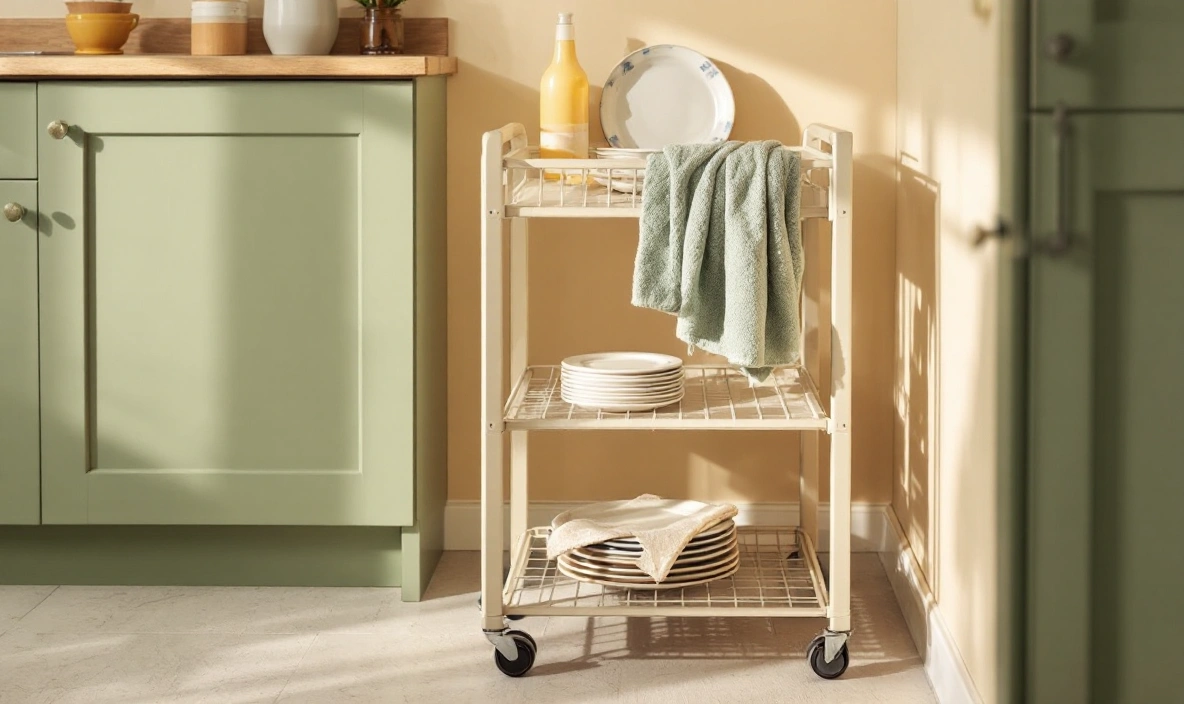
Only if you have walking room left after it's in place: 36 inches on every side, the minimum walkway in the National Kitchen and Bath Association (NKBA) guidelines. If you don't, a slim rolling cart gives some of the same extra counter and storage without blocking traffic.