
4 Best Kitchen Food Storage Containers in 2026
As an Amazon Associate, this website earns from qualifying purchases.
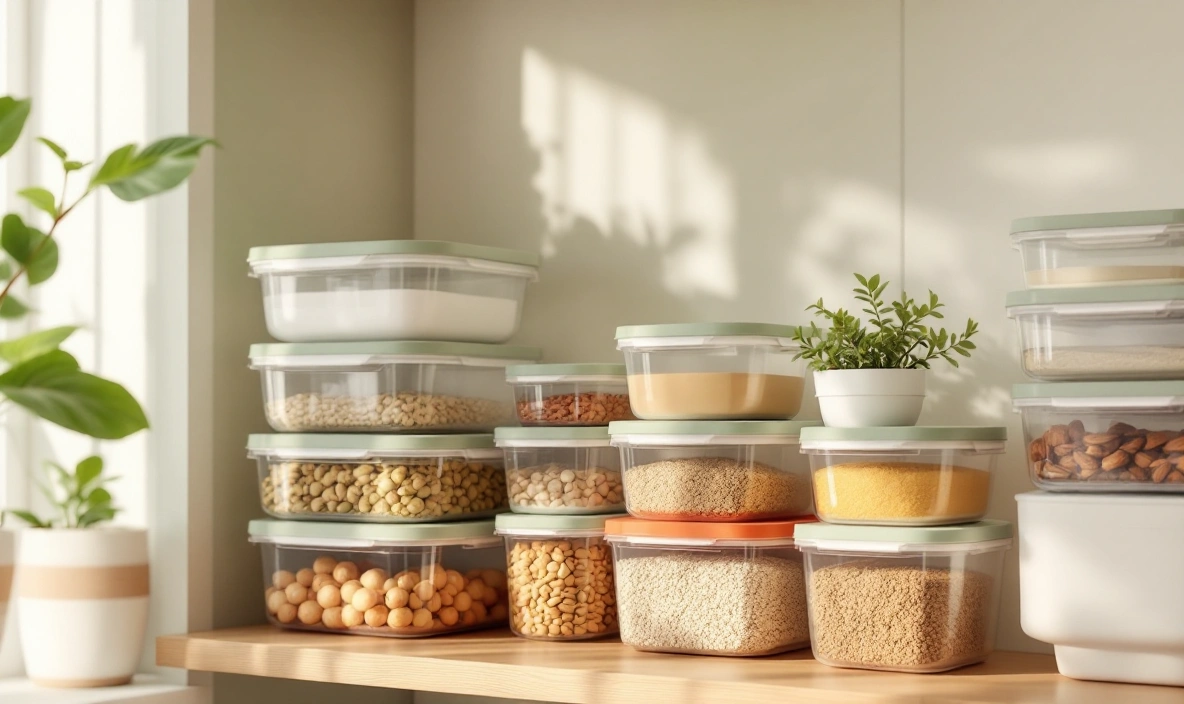
The short answer
The seal matters more than the material. A push-button or latch seal that actually keeps air out keeps flour, sugar, and grains fresh far longer than a snap-on lid, whether the container is 4 pieces or 24.
Last updated September 2026
Contents10
- #1. OXO Good Grips POP Container (4.4 qt): best single container to start with
- #2. Rubbermaid Brilliance Pantry Food Storage Container Set: best for a shared-lid system
- #3. Vtopmart Airtight Food Storage Containers (24-piece): best for a full pantry overhaul
- #4. CHEFSTORY Airtight Food Storage Containers (8-piece): best starter set across sizes
- Factors to consider when choosing food storage containers
- How we picked these containers
- How to start building your own system
- Labeling and rotation
- Cleaning and maintenance
- Who this guide is for
Our top 4 picks
- 1Best single container to start with
 OXO Good Grips POP Container (4.4 qt)
- 4.4 quart airtight container for pantry staples
- Push-button lid creates an airtight seal
- Stackable, space-efficient design
- 2Best for a shared-lid system
 Rubbermaid Brilliance Pantry Container Set (8-piece)
- Set of four containers with lids, eight pieces total
- Sizes from 3.2 cups to 16 cups
- Crystal-clear, BPA-free Tritan lids and bases
- 3Best for a full pantry overhaul
 Vtopmart Airtight Food Storage Containers (24-piece)
- 24 containers in four sizes, from 0.7 to 2.5 quarts
- Side-locking lids with a silicone gasket
- Made from BPA-free, food grade plastic
- 4Best starter set across sizes
 CHEFSTORY Airtight Food Storage Containers (8-piece)
- Eight containers in four sizes, from 0.7 to 2.5 quarts
- Side-locking lids with a silicone gasket for an airtight seal
- Stackable design to save cabinet and pantry space
Dry goods like flour, sugar, and cereal lose freshness mainly through air and moisture. The right kitchen food storage containers block that with a true airtight seal, a push-button design or a multi-point latch, far better than a bag clipped shut. These four sets cover a single container up to a full 24-piece pantry system.
#1. OXO Good Grips POP Container (4.4 qt): best single container to start with
OXO Good Grips POP Container (4.4 qt)
Our verdict:
Best single container to start with
Best for trying an airtight container on one high-turnover item before committing to a full set.
View on Amazon- 4.4 quart airtight container for pantry staples
- Push-button lid creates an airtight seal
- Stackable, space-efficient design
- Dishwasher safe and BPA-free
Keep in mind: it's sold as a single container, so a full pantry shelf means buying several separately.
Product details checked September 2026
A push-button lid activates a silicone seal with one hand. This size is built to roughly match a 5 lb. bag of flour or sugar. It stacks, it's BPA-free, and it's dishwasher safe. That makes it a low-risk way to test an airtight system.
#2. Rubbermaid Brilliance Pantry Food Storage Container Set: best for a shared-lid system
Rubbermaid Brilliance Pantry Container Set (8-piece)
Our verdict:
Best for a shared-lid system
Best for building a full pantry shelf where every lid fits more than one container size.
View on Amazon- Set of four containers with lids, eight pieces total
- Sizes from 3.2 cups to 16 cups
- Crystal-clear, BPA-free Tritan lids and bases
- Dishwasher and freezer safe
Keep in mind: the crystal-clear Tritan plastic costs more per container than a basic plastic set.
Product details checked September 2026
Secure latches on this set create a fully airtight seal that the listing calls leak-proof. One lid size fits multiple container sizes in the line. That keeps a shelf of Brilliance containers looking uniform and stacking predictably.
#3. Vtopmart Airtight Food Storage Containers (24-piece): best for a full pantry overhaul
Vtopmart Airtight Food Storage Containers (24-piece)
Our verdict:
Best for a full pantry overhaul
Best for converting most of a pantry shelf in one purchase across 4 different sizes.
View on Amazon- 24 containers in four sizes, from 0.7 to 2.5 quarts
- Side-locking lids with a silicone gasket
- Made from BPA-free, food grade plastic
- Includes 24 reusable labels
Keep in mind: 24 pieces take real shelf space, so measure before committing to the full set.
Product details checked September 2026
Side-locking lids with a silicone gasket keep this set airtight across 4 sizes, from 0.7 to 2.5 quarts, with 6 containers in each size. Reusable labels are included. You can mark contents and switch them later without buying new labels.
#4. CHEFSTORY Airtight Food Storage Containers (8-piece): best starter set across sizes
CHEFSTORY Airtight Food Storage Containers (8-piece)
Our verdict:
Best starter set across sizes
Best for starting a container system with a few of each size instead of one size repeated.
View on Amazon- Eight containers in four sizes, from 0.7 to 2.5 quarts
- Side-locking lids with a silicone gasket for an airtight seal
- Stackable design to save cabinet and pantry space
- Made from BPA-free plastic, includes 24 labels
Keep in mind: 8 pieces cover far less pantry space than the 24-piece Vtopmart set.
Product details checked September 2026
This 8-piece set includes 2 containers each in 4 sizes, from 0.7 to 2.5 quarts, all sealed with side-locking lids and a silicone gasket. It's a reasonable middle step between a single container and a full 24-piece overhaul.
Factors to consider when choosing food storage containers
Seal type
A push-button seal is fast and good for daily use. A latch seal, especially with multiple latch points, tends to hold a tighter seal for a full shelf you're not opening every day.
Set size versus your actual pantry
Count how many high-turnover items you actually have, flour, sugar, rice, pasta, cereal, coffee, before choosing a set size. A 24-piece set is only good value if you have the shelf space and item variety to use it.
Stacking shape
Square containers use shelf space better than round ones. They sit flush against each other without wasted gaps.
How we picked these containers
We looked at seal type, stacking design, and set size, from a single container up to a full 24-piece system, to cover different starting points. We did not test these products by hand. Details come from each listing, so check the current page before you buy.
How to start building your own system
Don't convert your whole pantry at once. Start with the four to eight items you go through fastest, like flour, sugar, rice, pasta, cereal and coffee, and put those in containers first. That's usually where the freshness benefit shows up fastest. It also shows you how your real shelf space and item sizes line up before you commit to a bigger set.
Labeling and rotation
A container system only stays useful if you can tell what's inside without opening every lid. Clear bodies help, but a simple label saves time once you have more than a handful of containers. The Vtopmart set includes reusable labels, and masking tape and a marker work for the rest. Write the date you filled each container, so older stock gets used before newer stock. That matters most for anything you buy in bulk and refill only now and then.
Cleaning and maintenance
The OXO POP and Rubbermaid Brilliance containers are both listed as dishwasher safe. That matters for anything that held flour or sugar, since both leave a fine dust on the walls even after emptying. Rinse and fully dry a container before refilling it with something different, since leftover moisture is the main threat to a fresh seal. Check the gasket or latches now and then too. A seal that has lost its grip won't keep food fresh, even if the container still looks fine.
Group baking supplies by the space they need
Use the baking pantry guide to store baking ingredients. Keep small packets apart from larger bags. Check that each jar fits through the door and has room for its lid to open.
Keep labels and empty-container storage in order
To organize soup and freezer portions, start with a shelf map. Label each pack so you can find it again. The sets here suit pantry storage. Check the maker's guide for any box or jar you plan to freeze. Follow its fill line too.
Who this guide is for
This is for anyone building or upgrading a pantry container system and deciding how big a set actually makes sense. For the cabinet or shelf these containers sit on, see our kitchen cabinet storage guide or pantry kitchen storage cabinets guide. If containers are only part of the problem, our kitchen storage solutions page helps you find the right fix for the rest.
Questions people also ask
Do airtight containers really keep food fresher?
Yes, for dry goods especially. Flour, sugar, cereal, and grains lose freshness mainly through air and moisture. An airtight seal slows that down far more than a bag clipped shut.
How many containers do I need to start?
Most kitchens do fine starting with 8 containers covering high-turnover items: flour, sugar, rice, pasta, cereal, and coffee. Add more once you see what shelf space you actually have.
Is a bigger set always better value?
Not necessarily. A larger set covers more items in one purchase, but only if the sizes match what you actually buy. Check the size breakdown, not just the piece count, before choosing a set.