
5 Best Kitchen Cabinet Storage Organizers in 2026
As an Amazon Associate, this website earns from qualifying purchases.
The short answer
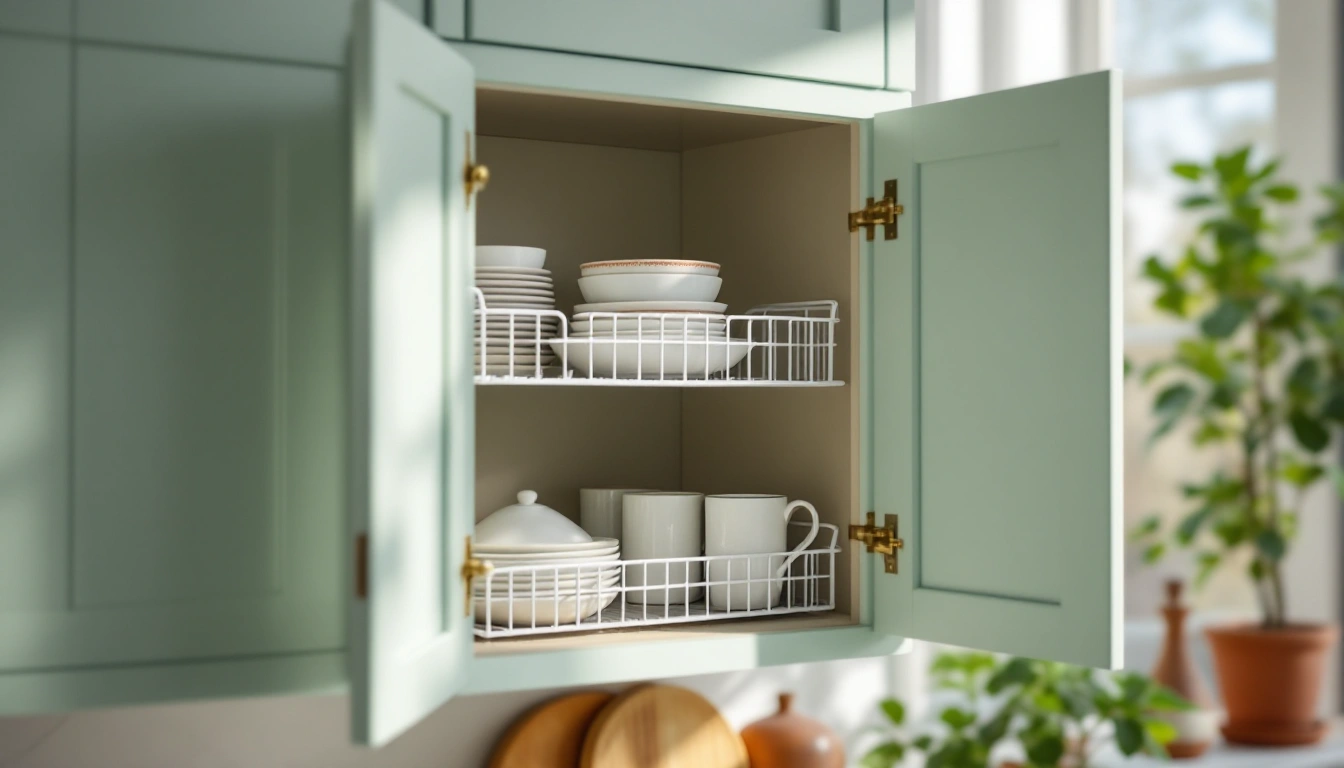
Most kitchen cabinets aren't full, they're poorly organized. A stackable shelf or a turntable usually recovers more usable space than buying a bigger cabinet, and it costs far less.
Last updated October 2026
Contents9
- #1. Amazon Basics Stackable Cabinet Shelves (set of 2): best for stacking dishware
- #2. SONGMICS Cabinet Organizer Shelves (set of 2): best for mixed shelf heights
- #3. Simple Houseware Pull-Out Sliding Basket: best for deep, hard-to-reach cabinets
- #4. MUDEELA Expandable Pot and Lid Organizer: best for pots, pans, and lids
- #5. YouCopia SmoothSpin Two-Tier Turntable: best adjustable two-tier turntable
- Factors to consider when choosing kitchen cabinet storage
- How we picked this kitchen cabinet storage
- A simple order of operations
- Who this guide is for
Our top 5 picks
- 1Best for stacking dishware
 Amazon Basics Stackable Cabinet Shelves (set of 2)
- Set of two metal wire shelves for cabinets or pantries
- Each shelf measures 12.5 by 8 by 4.5 inches
- Stacks or sits side by side to double storage
- 2Best for mixed shelf heights
 SONGMICS Cabinet Organizer Shelves (set of 2)
- Set of two shelves, one slightly smaller than the other
- Made from engineered wood and metal
- Each shelf holds up to 33 pounds
- 3Best for deep, hard-to-reach cabinets
 Simple Houseware Pull-Out Sliding Basket
- Measures 17.2 inches deep by 9.7 inches wide by 5 inches tall
- Wheel-guided rail system for smooth sliding
- Removable plastic divider for flexible sorting
- 4Best for pots, pans, and lids
 MUDEELA Expandable Pot and Lid Organizer
- Ten adjustable dividers for pots, pans and lids
- Expands from 11.81 to 22.85 inches wide
- Fits cookware from 6 to 12 inches
- 5Best adjustable two-tier turntable
 YouCopia SmoothSpin Two-Tier Turntable
- Three settings create 5, 6 or 7 inches of clearance between tiers
- Turns on stainless steel ball bearings
- Twist-and-lock center post sets the height without tools
Most kitchen cabinets aren't full. They're just poorly organized. Good kitchen cabinet storage often comes down to a few cheap add-ons, not a new cabinet. Fixed shelves waste height. A corner cabinet buries half its contents out of reach. These five organizers fix specific problems inside cabinets you already own.
#1. Amazon Basics Stackable Cabinet Shelves (set of 2): best for stacking dishware
Amazon Basics Stackable Cabinet Shelves (set of 2)
Our verdict:
Best for stacking dishware
Best for adding a second tier above plates or mugs without touching the cabinet itself.
View on Amazon- Set of two metal wire shelves for cabinets or pantries
- Each shelf measures 12.5 by 8 by 4.5 inches
- Stacks or sits side by side to double storage
- Steel wire coated in plastic, no tools needed
Keep in mind: each shelf is only 4.5 inches tall, so it suits shorter items, not tall boxes.
Product details checked September 2026
These metal wire shelves sit on top of what's already in the cabinet. They also stack together to add a second usable layer. At 12.5 by 8 inches each, they slot into most standard cabinet shelves. A plastic coating on the wire keeps them from scratching dishware underneath.
#2. SONGMICS Cabinet Organizer Shelves (set of 2): best for mixed shelf heights
SONGMICS Cabinet Organizer Shelves (set of 2)
Our verdict:
Best for mixed shelf heights
Best for a cabinet holding a mix of tall and short items that need different clearance.
View on Amazon- Set of two shelves, one slightly smaller than the other
- Made from engineered wood and metal
- Each shelf holds up to 33 pounds
- Stacks, nests or sits in an L-shape
Keep in mind: the 33 lb. per-shelf rating is modest next to a metal wire shelf.
Product details checked September 2026
One shelf in this pair sits slightly smaller than the other. That lets them nest or stack, or sit next to each other depending on what's underneath. Built from engineered wood and metal, each shelf holds up to 33 lbs. That's enough for spice jars, canned goods, or a stack of cookbooks.
#3. Simple Houseware Pull-Out Sliding Basket: best for deep, hard-to-reach cabinets
Simple Houseware Pull-Out Sliding Basket
Our verdict:
Best for deep, hard-to-reach cabinets
Best for dragging items out from the back of a deep base cabinet without kneeling and reaching.
View on Amazon- Measures 17.2 inches deep by 9.7 inches wide by 5 inches tall
- Wheel-guided rail system for smooth sliding
- Removable plastic divider for flexible sorting
- Sturdy metal wire frame
Keep in mind: it needs a flat surface to slide on and works best on an existing shelf, not loose in the cabinet.
Product details checked September 2026
This chrome wire basket pulls forward on a wheel-guided rail. That brings whatever sits at the back of the cabinet into easy reach. A removable plastic divider splits the basket into sections. A liner keeps small items from falling through the wire bottom.
#4. MUDEELA Expandable Pot and Lid Organizer: best for pots, pans, and lids
MUDEELA Expandable Pot and Lid Organizer
Our verdict:
Best for pots, pans, and lids
Best for a cabinet where pot lids and baking sheets currently slide around loose.
View on Amazon- Ten adjustable dividers for pots, pans and lids
- Expands from 11.81 to 22.85 inches wide
- Fits cookware from 6 to 12 inches
- Anti-scratch strips protect pots and pans
Keep in mind: it holds cookware upright in slots rather than stacking pots flat, so it needs vertical clearance.
Product details checked September 2026
Ten adjustable dividers expand this rack from 11.81 to 22.85 inches. That range fits most base cabinets while keeping pans and lids standing upright instead of sliding around. Rubber tubing on each divider keeps items from tipping over when the cabinet door opens and closes.
#5. YouCopia SmoothSpin Two-Tier Turntable: best adjustable two-tier turntable
YouCopia SmoothSpin Two-Tier Turntable
Our verdict:
Best adjustable two-tier turntable
Best for a cabinet shelf where jars need a second tier and room to turn.
View on Amazon- Three settings create 5, 6 or 7 inches of clearance between tiers
- Turns on stainless steel ball bearings
- Twist-and-lock center post sets the height without tools
- Non-slip feet; maker footprint is 10.6 inches square
Keep in mind: check the full 7-to-9-inch height and the space above the upper tier before buying.
Product details checked October 2026
The SmoothSpin uses a twist-and-lock center post and steel ball bearings. Its three settings give 5, 6 or 7 inches of clearance between the tiers; that is not the full height of the organizer. The maker lists a 10.6-inch-square footprint and a total height of 7 to 9 inches.
Leave extra space for whatever stands on the upper tier. Non-slip feet keep the base in place while the trays turn.
Factors to consider when choosing kitchen cabinet storage
Shelf height versus stacking
If your cabinet has adjustable shelf pegs, lower a shelf to match what's stored on it. That often frees up more space than any add-on. If the shelves are fixed, a stackable shelf or riser adds a second layer without tools.
Corner cabinets need a dedicated fix
Blind corner cabinets waste the most space in most kitchens. The back third is hard to reach without pulling everything else out first. A turntable or pull-out basket built for that spot recovers real usable room.
Weight rating
Check what an organizer is rated to hold before loading it with heavy cookware or canned goods. A metal wire shelf generally holds more than a plastic turntable or a light wood-and-metal shelf.
How we picked this kitchen cabinet storage
We looked for organizers that solve a specific cabinet problem. That includes wasted vertical space, deep cabinets that hide items at the back, loose pot lids, and cabinet corners. We did not test these products by hand. Details come from each listing, so check the current page before you buy.
A simple order of operations
If your cabinets feel tight, work through this order before buying anything. First, adjust shelf heights to match what's stored. Next, group items by how often you reach for them. Then add a stacking shelf, pull-out basket, or turntable to reclaim the space that's left. Most kitchens solve a real chunk of their storage problem in the first two steps alone.
Who this guide is for
This is for anyone whose cabinets feel cramped but isn't sure whether the fix is a new cabinet or a better layout for the one they have. If you've worked through these organizers and still need more room, our kitchen storage cabinets guide hub compares full cabinet options.
Questions people also ask
Why does my kitchen cabinet feel full when it isn't?
Usually because fixed shelf spacing leaves dead air above short items. A shelf sized for cereal boxes wastes several inches of height when it's storing spice jars instead. A stackable riser or a second shelf recovers that space.
What should go on the top shelf of a tall cabinet?
Items you use rarely, since a top shelf usually needs a step stool. Seasonal dishware and backstock of pantry goods are good candidates. Keep daily items at eye level or below.
Is it worth adding organizers instead of replacing a cabinet?
Usually yes, if the cabinet's size is fine but the layout isn't working. A stackable shelf or turntable can double the usable storage in one shelf's footprint for a fraction of what a new cabinet costs.