
5 Best Corner Cabinet Organizers in 2026
As an Amazon Associate, this website earns from qualifying purchases.
The short answer
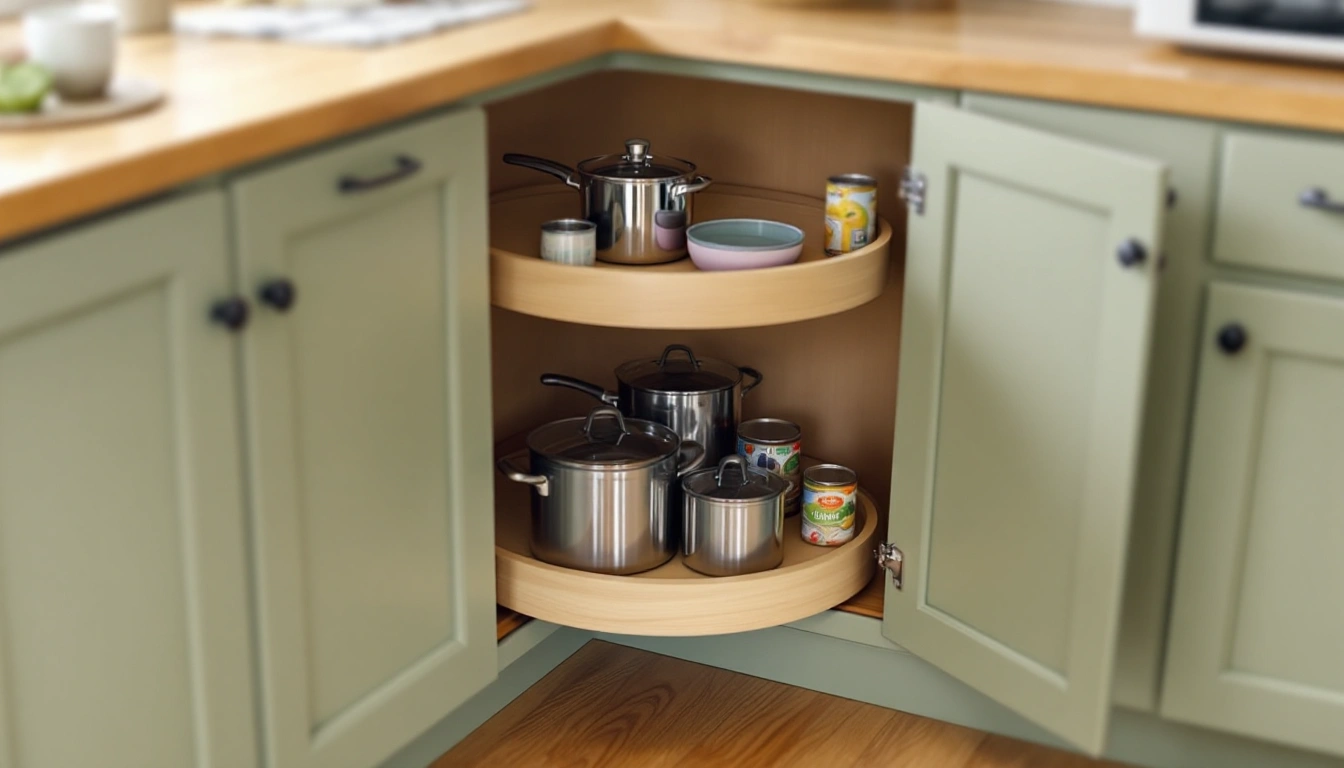
Corner cabinets come in two shapes, and they need two different products. An open corner that faces you directly wants a lazy Susan. A blind corner that hides behind an adjacent wall wants a pull-out built for that reach. Check which shape you have before buying either.
Last updated October 2026
Contents8
- #1. Rev-A-Shelf 28 in Kidney-Shaped 2-Tier Lazy Susan: best for a standard open corner
- #2. Rev-A-Shelf 28 in Pie-Cut 2-Tier Lazy Susan: best pie-cut shape for tight corners
- #3. Rev-A-Shelf 24 in Kidney-Shaped 2-Tier Lazy Susan: best for a smaller corner cabinet
- #4. Rev-A-Shelf Blind Corner Dual Pullout Organizer: best for a true blind corner
- #5. YouCopia SmoothSpin Two-Tier Turntable: best adjustable two-tier turntable
- Factors to consider when choosing a corner cabinet organizer
- How we picked these corner cabinet organizers
- Why corner cabinets get built this way
Our top 5 picks
- 1Best for a standard open corner
 Rev-A-Shelf 28 in Kidney-Shaped 2-Tier Lazy Susan
- 28 inch kidney-shaped turntable with two rotating tiers
- Chrome wire construction, holds up to 64 pounds per square foot
- Telescoping shaft fits a 26 to 31 inch cabinet height
- 2Best pie-cut shape for tight corners
 Rev-A-Shelf 28 in Pie-Cut 2-Tier Lazy Susan
- 28 inch pie-cut lazy Susan with two shelves
- Chrome posts and durable polystyrene shelves
- Fits a 26 to 32 inch interior cabinet height
- 3Best for a smaller corner cabinet
 Rev-A-Shelf 24 in Kidney-Shaped 2-Tier Lazy Susan
- 24 inch kidney-shaped turntable for corner cabinets
- Made from injection-molded polymer plastic
- Fits a 26 to 31 inch interior cabinet height
- 4Best for a true blind corner
 Rev-A-Shelf Blind Corner Dual Pullout Organizer
- Fits a blind left or blind right cabinet
- Minimum 18 inch opening, fits most 48 inch blind corner cabinets
- Measures 32.38 by 21.59 by 21 inches
- 5Best adjustable two-tier turntable
 YouCopia SmoothSpin Two-Tier Turntable
- Three settings create 5, 6 or 7 inches of clearance between tiers
- Turns on stainless steel ball bearings
- Twist-and-lock center post sets the height without tools
Corner cabinet organizer covers two different cabinet shapes. Mixing them up is the easiest way to buy the wrong product. This page compares five real picks across both shapes. There is the open corner that faces you directly, and the blind corner that hides part of its space behind another cabinet's wall.
We did not test these by hand. Details come from each listing, so check the current page before you buy.
#1. Rev-A-Shelf 28 in Kidney-Shaped 2-Tier Lazy Susan: best for a standard open corner
Rev-A-Shelf 28 in Kidney-Shaped 2-Tier Lazy Susan
Our verdict:
Best for a standard open corner
Best for a round corner cabinet that faces you directly with no hidden section.
View on Amazon- 28 inch kidney-shaped turntable with two rotating tiers
- Chrome wire construction, holds up to 64 pounds per square foot
- Telescoping shaft fits a 26 to 31 inch cabinet height
- Requires the door to be hinged to the cabinet
Keep in mind: the door must be hinged to the cabinet itself, not the lazy Susan.
Product details checked September 2026
This turntable rotates on two independent chrome tiers. It holds up to 64 pounds per square foot. The shaft telescopes to fit a 26 to 31 inch cabinet height.
#2. Rev-A-Shelf 28 in Pie-Cut 2-Tier Lazy Susan: best pie-cut shape for tight corners
Rev-A-Shelf 28 in Pie-Cut 2-Tier Lazy Susan
Our verdict:
Best pie-cut shape for tight corners
Best for a corner cabinet where a pie-cut shelf clears the door swing better than a kidney shape.
View on Amazon- 28 inch pie-cut lazy Susan with two shelves
- Chrome posts and durable polystyrene shelves
- Fits a 26 to 32 inch interior cabinet height
- Rotates a full 360 degrees
Keep in mind: the cabinet door must be removed from any existing lazy Susan and reattached to this unit.
Product details checked September 2026
This 28 inch pie-cut lazy Susan spins a full 360 degrees on sturdy polystyrene shelves with chrome posts. It fits an interior height of 26 to 32 inches.
#3. Rev-A-Shelf 24 in Kidney-Shaped 2-Tier Lazy Susan: best for a smaller corner cabinet
Rev-A-Shelf 24 in Kidney-Shaped 2-Tier Lazy Susan
Our verdict:
Best for a smaller corner cabinet
Best for a corner base cabinet too small for the 28 inch option.
View on Amazon- 24 inch kidney-shaped turntable for corner cabinets
- Made from injection-molded polymer plastic
- Fits a 26 to 31 inch interior cabinet height
- Each shelf holds up to 50 pounds
Keep in mind: each shelf holds up to 50 pounds, so spread weight evenly across both tiers.
Product details checked September 2026
This smaller kidney-shaped turntable is molded from tough polymer plastic, so it is easy to clean. It fits the same 26 to 31 inch height range as the larger version.
#4. Rev-A-Shelf Blind Corner Dual Pullout Organizer: best for a true blind corner
Rev-A-Shelf Blind Corner Dual Pullout Organizer
Our verdict:
Best for a true blind corner
Best for a corner cabinet with a section that hides behind the wall of the next cabinet.
View on Amazon- Fits a blind left or blind right cabinet
- Minimum 18 inch opening, fits most 48 inch blind corner cabinets
- Measures 32.38 by 21.59 by 21 inches
- Wire frame with a three-piece ball-bearing slide
Keep in mind: it needs a minimum 18 inch opening, so measure before you order.
Product details checked September 2026
This pull-out fits a blind left or blind right cabinet. It slides fully outside the cabinet on a ball-bearing slide, and it fits most 48 inch blind corner cabinets.
#5. YouCopia SmoothSpin Two-Tier Turntable: best adjustable two-tier turntable
YouCopia SmoothSpin Two-Tier Turntable
Our verdict:
Best adjustable two-tier turntable
Best for a cabinet shelf where jars need a second tier and room to turn.
View on Amazon- Three settings create 5, 6 or 7 inches of clearance between tiers
- Turns on stainless steel ball bearings
- Twist-and-lock center post sets the height without tools
- Non-slip feet; maker footprint is 10.6 inches square
Keep in mind: check the full 7-to-9-inch height and the space above the upper tier before buying.
Product details checked October 2026
The SmoothSpin uses a twist-and-lock center post and steel ball bearings. Its three settings give 5, 6 or 7 inches of clearance between the tiers; that is not the full height of the organizer. The maker lists a 10.6-inch-square footprint and a total height of 7 to 9 inches.
Leave extra space for whatever stands on the upper tier. Non-slip feet keep the base in place while the trays turn.
Factors to consider when choosing a corner cabinet organizer
Check the shape first
Open the corner cabinet door fully. Look inside with the light on. If you can see the entire interior, including the far corner, you have an open corner. If part of the cabinet clearly keeps going behind the neighboring cabinet's wall, that is a blind corner.
Measure the diameter or opening
For an open corner, measure the cabinet's usable diameter before choosing between a 24 or 28 inch lazy Susan. For a blind corner, measure the opening width against the pull-out's minimum spec.
Match contents to the shape
Round cookware and jars with a stable base work well on a rotating shelf. Tall, narrow bottles can tip as the shelf spins, so keep those on a flat shelf elsewhere.
How we picked these corner cabinet organizers
We split picks by open corner and blind corner shape, since they solve different problems. We did not test these by hand. Details come from each listing, so check the current page before you buy.
Why corner cabinets get built this way
Corner cabinets exist because two runs of base cabinets have to meet somewhere. An open corner cabinet gives the corner its own door and a clear view straight in. A blind corner works differently. One cabinet run continues past the corner, and the next cabinet's door covers both its own space and part of the hidden corner behind it.
Questions people also ask
How do I tell an open corner from a blind corner?
Open the cabinet door and look straight in. If you can see the entire back corner without reaching around a wall, it is an open corner. If part of the cabinet disappears behind the wall of the next cabinet, that is a blind corner.
Can I put a lazy Susan in a blind corner cabinet?
A standard lazy Susan rotates in place and will not reach the hidden section behind the wall in a true blind corner. That area needs a pull-out mechanism that swings its baskets out from behind the wall as it extends.
What size lazy Susan fits a standard corner base cabinet?
Standard corner base cabinets commonly fit a 24 or 28 inch diameter lazy Susan. Measure your cabinet's usable diameter, not just the outer cabinet size, since the shelf needs room to rotate.
Is a corner organizer worth it for a small kitchen?
Corner cabinets often waste more usable space than any other cabinet, since the shape makes the back area hard to reach even when it is not technically blind. In a small kitchen, that reclaimed space tends to matter more.