
6 Best Cabinet Organizers for Kitchens in 2026
As an Amazon Associate, this website earns from qualifying purchases.
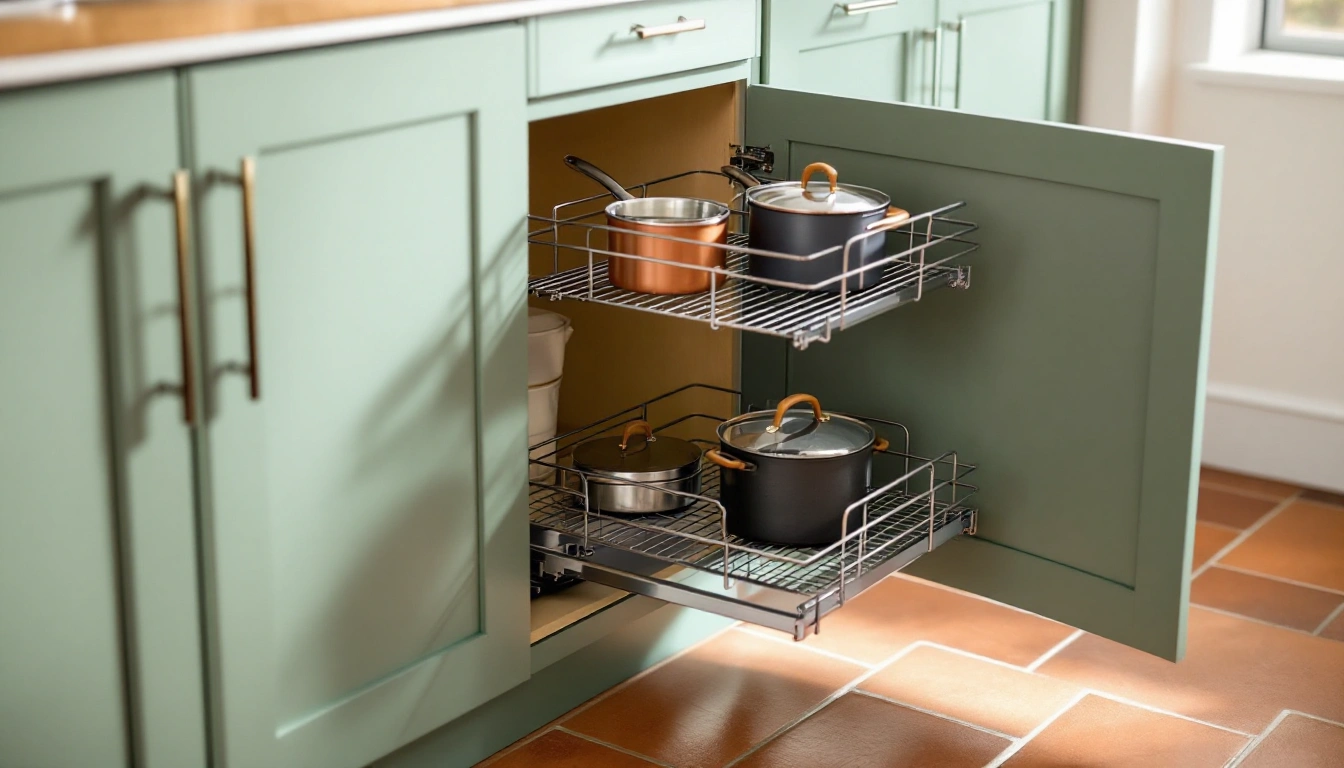
The short answer
Organize your kitchen cabinet by cabinet, not all at once. Base cabinets want a pull-out shelf. Upper cabinets want a turntable. Corners want a lazy Susan. Pot lids and cans want a stacking or specialty rack.
Last updated October 2026
Contents12
- #1. Rev-A-Shelf 2-Tier Wire Pullout Organizer: best for a deep base cabinet
- #2. Rev-A-Shelf Kidney-Shaped 2-Tier Lazy Susan: best for a round corner cabinet
- #3. Lynk Professional Slide Out Cabinet Organizer: best for a narrow or odd cabinet
- #4. YouCopia SmoothSpin Two-Tier Turntable: best adjustable two-tier turntable
- #5. Amazon Basics Stackable Cabinet Shelves: best for a shallow stacking gap
- #6. MUDEELA Expandable Pot and Lid Organizer: best for pot lids and cookware
- Factors to consider when choosing cabinet organizers for kitchen use
- How we picked these cabinet organizers for the kitchen
- Under-sink cabinets: work around the plumbing
- Corner cabinets: open or blind
- An order of operations that saves money
- Situations this page does not cover
Our top 6 picks
- 1Best for a deep base cabinet
 Rev-A-Shelf 2-Tier Wire Pullout Organizer
- Minimum opening of 11.5 by 22.25 by 19 inches
- Two steel wire baskets on full-extension slides
- Installs with four screws
- 2Best for a round corner cabinet
 Rev-A-Shelf 28 in Kidney-Shaped 2-Tier Lazy Susan
- 28 inch kidney-shaped turntable with two rotating tiers
- Chrome wire construction, holds up to 64 pounds per square foot
- Telescoping shaft fits a 26 to 31 inch cabinet height
- 3Best for a narrow or odd cabinet
 Lynk Professional Slide Out Cabinet Organizer
- Ball-bearing glide system built into the base of the drawer
- Chrome wire finish resists rust
- Alignment guide installs without measuring
- 4Best adjustable two-tier turntable
 YouCopia SmoothSpin Two-Tier Turntable
- Three settings create 5, 6 or 7 inches of clearance between tiers
- Turns on stainless steel ball bearings
- Twist-and-lock center post sets the height without tools
- 5Best for a shallow stacking gap
 Amazon Basics Stackable Cabinet Shelves (set of 2)
- Set of two metal wire shelves for cabinets or pantries
- Each shelf measures 12.5 by 8 by 4.5 inches
- Stacks or sits side by side to double storage
- 6Best for pot lids and cookware
 MUDEELA Expandable Pot and Lid Organizer
- Ten adjustable dividers for pots, pans and lids
- Expands from 11.81 to 22.85 inches wide
- Fits cookware from 6 to 12 inches
Good cabinet organizers for kitchen cabinets solve different problems depending on where the cabinet sits. A base cabinet swallows things at the back. An upper cabinet wastes air. A corner is hard to reach, and a lower cabinet lets pot lids slide around. This page walks through six real products, one for each common trouble spot.
We did not test these by hand. Details come from each listing, so check the current page before you buy.
#1. Rev-A-Shelf 2-Tier Wire Pullout Organizer: best for a deep base cabinet
Rev-A-Shelf 2-Tier Wire Pullout Organizer
Our verdict:
Best for a deep base cabinet
Best for a base cabinet that swallows pots and pans at the back.
View on Amazon- Minimum opening of 11.5 by 22.25 by 19 inches
- Two steel wire baskets on full-extension slides
- Installs with four screws
- Suits pots, pans, lids and small appliances
Keep in mind: it needs a minimum 11.5 inch wide opening for face-frame cabinets.
Product details checked September 2026
Two steel wire baskets each slide out on their own full-extension slide. The back of the cabinet comes to you. The unit measures 11.75 inches wide, 22 inches deep and 19 inches tall, and it installs with four screws. For a very narrow base cabinet, the slim 5-inch Rev-A-Shelf 448 in our cabinet organizer shelf picks holds oils and sprays instead.
#2. Rev-A-Shelf Kidney-Shaped 2-Tier Lazy Susan: best for a round corner cabinet
Rev-A-Shelf 28 in Kidney-Shaped 2-Tier Lazy Susan
Our verdict:
Best for a round corner cabinet
Best for a corner cabinet that opens straight into the corner.
View on Amazon- 28 inch kidney-shaped turntable with two rotating tiers
- Chrome wire construction, holds up to 64 pounds per square foot
- Telescoping shaft fits a 26 to 31 inch cabinet height
- Requires the door to be hinged to the cabinet
Keep in mind: the door has to be hinged to the cabinet itself, not the lazy Susan.
Product details checked September 2026
This 28 inch turntable rotates on two independent tiers and holds up to 64 pounds per square foot. The shaft telescopes to fit a 26 to 31 inch cabinet height.
#3. Lynk Professional Slide Out Cabinet Organizer: best for a narrow or odd cabinet
Lynk Professional Slide Out Cabinet Organizer
Our verdict:
Best for a narrow or odd cabinet
Best for a cabinet width that does not match standard shelf sizes.
View on Amazon- Ball-bearing glide system built into the base of the drawer
- Chrome wire finish resists rust
- Alignment guide installs without measuring
- Backed by a lifetime limited warranty on the mechanism
Keep in mind: check your door swing clearance before you install it.
Product details checked September 2026
This chrome pull-out uses glides built into the base of the drawer, so it fits narrower cabinets without losing storage width. It comes with a lifetime warranty on the mechanism.
#4. YouCopia SmoothSpin Two-Tier Turntable: best adjustable two-tier turntable
YouCopia SmoothSpin Two-Tier Turntable
Our verdict:
Best adjustable two-tier turntable
Best for a cabinet shelf where jars need a second tier and room to turn.
View on Amazon- Three settings create 5, 6 or 7 inches of clearance between tiers
- Turns on stainless steel ball bearings
- Twist-and-lock center post sets the height without tools
- Non-slip feet; maker footprint is 10.6 inches square
Keep in mind: check the full 7-to-9-inch height and the space above the upper tier before buying.
Product details checked October 2026
The SmoothSpin uses a twist-and-lock center post and steel ball bearings. Its three settings give 5, 6 or 7 inches of clearance between the tiers; that is not the full height of the organizer. The maker lists a 10.6-inch-square footprint and a total height of 7 to 9 inches.
Leave extra space for whatever stands on the upper tier. Non-slip feet keep the base in place while the trays turn.
#5. Amazon Basics Stackable Cabinet Shelves: best for a shallow stacking gap
Amazon Basics Stackable Cabinet Shelves (set of 2)
Our verdict:
Best for a shallow stacking gap
Best for a cabinet with dishes or cans that could use a second level.
View on Amazon- Set of two metal wire shelves for cabinets or pantries
- Each shelf measures 12.5 by 8 by 4.5 inches
- Stacks or sits side by side to double storage
- Steel wire coated in plastic, no tools needed
Keep in mind: these are fixed shelves, so they will not help with a deep, hard-to-reach cabinet.
Product details checked September 2026
This set of two metal wire shelves stacks or sits side by side, each measuring 12.5 by 8 by 4.5 inches. It needs no tools to assemble.
#6. MUDEELA Expandable Pot and Lid Organizer: best for pot lids and cookware
MUDEELA Expandable Pot and Lid Organizer
Our verdict:
Best for pot lids and cookware
Best for a lower cabinet where pot lids and cutting boards slide around loose.
View on Amazon- Ten adjustable dividers for pots, pans and lids
- Expands from 11.81 to 22.85 inches wide
- Fits cookware from 6 to 12 inches
- Anti-scratch strips protect pots and pans
Keep in mind: it fits cookware from 6 to 12 inches, so measure your largest pieces first.
Product details checked September 2026
This rack expands from 11.81 to 22.85 inches wide and comes with 10 adjustable dividers. It sets up in about a minute with no tools, and anti-scratch strips protect the cookware.
Factors to consider when choosing cabinet organizers for kitchen use
Match the product to the cabinet, not the kitchen
Base cabinets, upper cabinets, corners and cookware storage each waste space in a different way. Buying one organizer style for the whole kitchen usually means it fits one cabinet well and the rest poorly.
Measure before you buy
Every product above lists a minimum opening size or a size range. Measure your cabinet's actual interior opening, not the outer cabinet size, before ordering anything.
Start with the cabinet you fight with most
If you are organizing more than one cabinet, start with the one that causes the most daily friction. That gives you a feel for sizing and mounting before you tackle a trickier spot like a corner.
How we picked these cabinet organizers for the kitchen
We matched each product to a specific kitchen spot, from base cabinets to cookware storage. We did not test these by hand. Details come from each listing, so check the current page before you buy.
Under-sink cabinets: work around the plumbing
The cabinet under the sink has a built-in obstacle: the drain and water lines run through the middle. A pull-out sized for the full cabinet width can bump into those pipes. So measuring around them matters more here than anywhere else.
Two narrower pull-outs, one on each side of the drain, often work better under a sink than one wide shelf. The Lynk slide-out at #3 fits this job well. Its glides sit under the shelf, not on the sides, which saves width. A pair of expandable pull-outs like the Seinloes set in our pull out cabinet organizer picks is another route.
Corner cabinets: open or blind
A corner cabinet you can see straight into suits a lazy Susan like the Rev-A-Shelf kidney at #2. A corner with a section hidden behind the next cabinet's wall is a blind corner, and a lazy Susan won't reach it. That shape needs a pull-out built for it. See the blind corner cabinet organizer picks.
An order of operations that saves money
If you're organizing more than one cabinet, go in order of how much daily friction each one causes. A base cabinet you dig through every night pays back faster than an upper cabinet you open twice a week. Starting there also teaches you how these pieces size and mount before you tackle a trickier corner or under-sink cabinet.
Walk through every cabinet with a tape measure before ordering anything, rather than measuring and buying one at a time. Cabinets in the same run are often built to the same sizes. Once you know one base cabinet's opening, the others nearby are usually close, which speeds up the rest of the project.
Situations this page does not cover
A pantry closet, a freestanding cabinet or an island with its own drawers each raise their own sizing questions. They do not map onto the cabinet spots above. If your space is a standalone unit rather than a built-in cabinet, expect different fit specs than anything covered here.
Questions people also ask
Should I organize every cabinet in my kitchen at once?
Most people get better results tackling one cabinet at a time, matched to its situation, rather than buying one organizer style for the whole kitchen. A base cabinet, an upper cabinet, and a corner cabinet each have different depths and reach problems.
What's the best organizer for a small upper cabinet?
A turntable works well in upper cabinets because it adjusts to a shorter shelf gap and needs a smaller footprint than most base-cabinet pull-outs.
How is this page different from the main cabinet organizers guide?
The main guide sorts products by organizer type, like pull-out shelf versus lazy Susan. This page sorts by where the cabinet sits in your kitchen, since the same organizer type can apply to more than one spot.
What should I check before buying a pot lid organizer?
Measure the cabinet height and check that your lids and cookware sizes fall within the range the dividers adjust to. Most lid organizers list a size range for the cookware they hold.