
4 Best Deep Drawer Organizers for Tall Kitchen Drawers in 2026
As an Amazon Associate, this website earns from qualifying purchases.
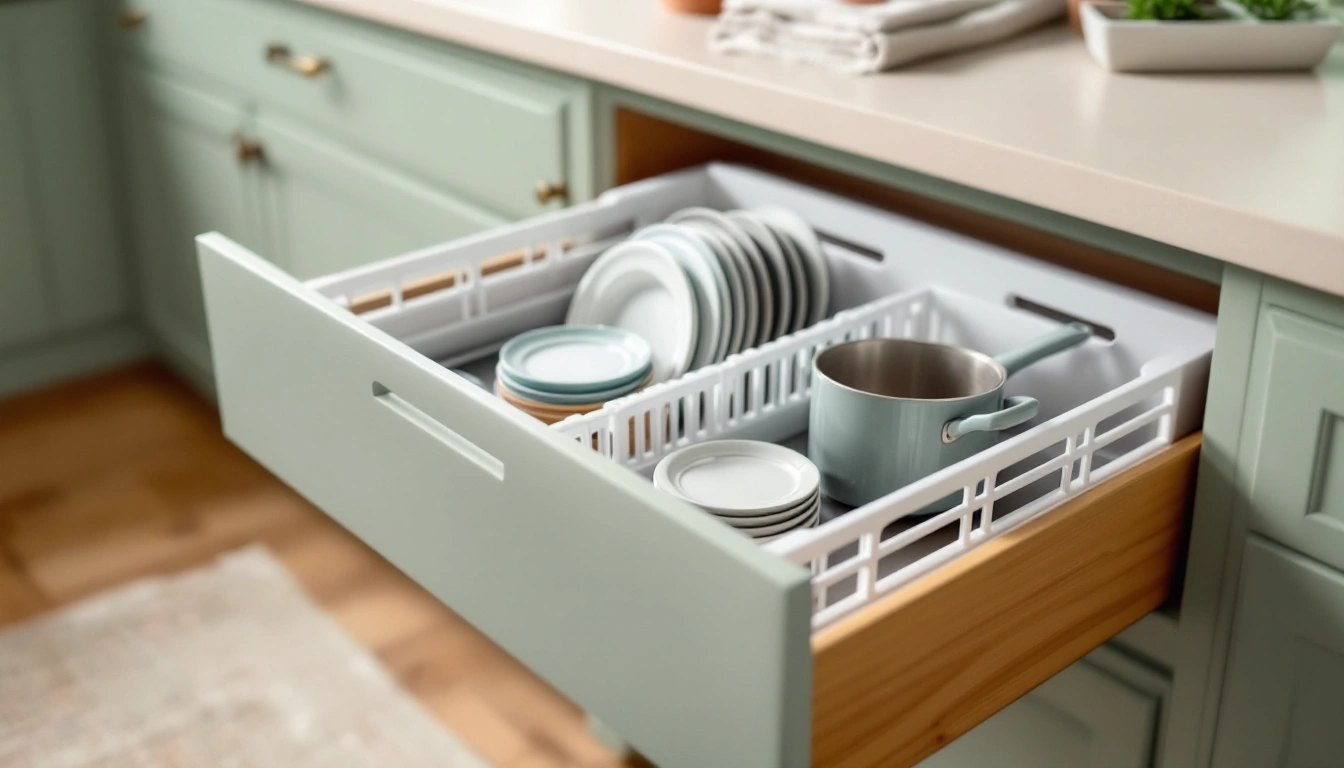
The short answer
The OXO Adjustable Deep Drawer Organizer is built specifically for drawers past standard depth. The YouCopia DrawerFit adds a second sliding layer for even more depth, and the BAMEOS Tall Bamboo tray suits a deep drawer you want to look finished.
Last updated October 2026
Contents8
- #1. OXO Good Grips Adjustable Deep Drawer Organizer: best built-in deep tray
- #2. YouCopia DrawerFit Sliding Drawer Bin: best sliding second layer
- #3. BAMEOS Tall Bamboo Drawer Organizer: best for a deep, visible drawer
- #4. Lifewit 4 in Adjustable Drawer Dividers: best custom drawer layout
- Factors to consider when choosing a deep drawer organizer
- How we picked
- Why we skipped plain flat trays
- Who this guide is for
Our top 4 picks
- 1Best built-in deep tray
 OXO Good Grips Adjustable Deep Drawer Organizer
- Two compartments for large and small items
- Uses the full depth of a deep drawer
- A shallow tray fits on top of the base
- 2Best sliding second layer
 YouCopia DrawerFit Sliding Drawer Bin
- Expands from 15 to 23.7 inches
- Creates an upper storage level in a deep drawer
- Locking teeth hold it at the set length
- 3Best for a deep, visible drawer
 BAMEOS Tall Bamboo Drawer Organizer
- 3.9 inch deep bamboo organizer with 8 compartments
- Expands from 12.52 to 22.64 inches wide
- Depth measures 16.1 inches for larger utensils and tools
- 4Best custom drawer layout
 Lifewit 4 in Adjustable Drawer Dividers
- Plastic divider walls let you choose your own drawer layout
- Top button adjusts and retracts each divider
- Spring tension and padded ends hold each wall in place
A deep drawer organizer earns its keep once a drawer passes about 4 to 5 inches deep. A flat tray wastes space in it, since most trays are built under 3 inches tall. This guide compares four organizers that use the extra depth instead of leaving it empty.
We did not test these by hand. The facts below come from each listing. Check the current page before you buy.
#1. OXO Good Grips Adjustable Deep Drawer Organizer: best built-in deep tray
OXO Good Grips Adjustable Deep Drawer Organizer
Our verdict:
Best built-in deep tray
Best for a deep drawer where you want a tray built for the extra depth, not a stack of separate pieces.
View on Amazon- Two compartments for large and small items
- Uses the full depth of a deep drawer
- A shallow tray fits on top of the base
- Designed for deep drawer storage
Keep in mind: it splits the drawer into two main sections, so it suits fewer, larger categories rather than many small ones.
Product details checked September 2026
This tray gives you two levels in one piece. It uses the full depth instead of one flat layer. A shallow top tray sits over the deeper base. Small items stay visible while larger ones go underneath.
#2. YouCopia DrawerFit Sliding Drawer Bin: best sliding second layer
YouCopia DrawerFit Sliding Drawer Bin
Our verdict:
Best sliding second layer
Best for a deep drawer where you want an upper layer that slides out of the way instead of stacking fixed pieces.
View on Amazon- Expands from 15 to 23.7 inches
- Creates an upper storage level in a deep drawer
- Locking teeth hold it at the set length
- Made from BPA-free recycled plastic
Keep in mind: it adds a layer above what is already in the drawer, so measure the full depth first to be sure both layers fit.
Product details checked September 2026
This bin expands from 15 to 23.7 inches, then slides across the drawer on locking teeth. That creates a second level for small items while leaving the space below reachable.
#3. BAMEOS Tall Bamboo Drawer Organizer: best for a deep, visible drawer
BAMEOS Tall Bamboo Drawer Organizer
Our verdict:
Best for a deep, visible drawer
Best for a deep drawer near open shelving, where you want the extra depth used and the material to look intentional.
View on Amazon- 3.9 inch deep bamboo organizer with 8 compartments
- Expands from 12.52 to 22.64 inches wide
- Depth measures 16.1 inches for larger utensils and tools
- Built from bamboo for a natural, sturdy finish
Keep in mind: at nearly 4 inches deep itself, it needs a genuinely deep drawer to fit, so measure carefully first.
Product details checked September 2026
This tray is 3.9 inches deep with eight sections. It fits a drawer that goes well past standard depth. Bamboo holds up to daily use and looks more finished than plastic in a spot people can see.
#4. Lifewit 4 in Adjustable Drawer Dividers: best custom drawer layout
Lifewit 4 in Adjustable Drawer Dividers
Our verdict:
Best custom drawer layout
Best for a drawer with mixed tools or wrap boxes that do not suit fixed tray slots.
View on Amazon- Plastic divider walls let you choose your own drawer layout
- Top button adjusts and retracts each divider
- Spring tension and padded ends hold each wall in place
- ABS plastic construction for kitchen tools and mixed drawer contents
Keep in mind: these walls are four inches high; check the height and length against your drawer.
Product details checked October 2026
Each divider is an ABS plastic wall. Put it where your tools need a slot. Press the top button to change its length. Spring tension and padded ends hold it in place. Check the clear span inside the drawer before buying.
The walls are four inches high. Check the space above them too. Measure from the base to the lowest point over the drawer. Leave room for the drawer to close without catching a wall. A shallow tray fitting there does not mean a tall wall will fit.
Factors to consider when choosing a deep drawer organizer
Measure the full depth first
Measure from the bottom of the drawer to the top edge. Do not just measure width and front-to-back distance. That number tells you how many stacked layers will fit. It also tells you how tall a standing divider can be. Leave a little clearance, since drawers rarely close flush to the very top.
Match the approach to your items
Stacking works best for small, similar items you would store flat in layers, like utensils or gadgets. Standing items on edge works better for flat, long pieces like cutting boards or serving trays. Many deep drawers use both approaches on different sides.
Check the weight your slides can handle
A deep drawer with stacked layers carries more weight than a shallow drawer with one tray. Before loading a stacked set to its limit, check that your drawer's slides can handle the load. This matters most in an older cabinet.
How we picked
We looked for organizers built for depth past the standard 2 to 3 inches. That meant a built-in two-level design, a stacking set, or dividers meant for standing items upright. We did not test these by hand. Details come from each listing, so check the current page before you buy.
Why we skipped plain flat trays
A flat tray works fine for a standard drawer. It fails a deep one, so we left plain single-layer trays out of this guide. Every pick here builds in a second level, stacks, or stands items on edge. Those are the approaches that fill a deep drawer's space.
Who this guide is for
This guide is for a kitchen drawer deeper than the standard 2 to 3 inches most organizers assume. A flat tray clearly is not using the space in that kind of drawer. If your problem is the opposite, a drawer too narrow or shallow, our small drawer organizer guide covers that instead.
Questions people also ask
How deep does a drawer need to be before a standard tray stops working?
Once a drawer passes about 4 to 5 inches deep, a standard flat tray, usually under 3 inches tall, starts leaving noticeable dead space above it. That is the point to look at deep-specific or stacking options instead.
Is stacking or a built-in deep tray the better approach?
A tray built for depth from the start, like the OXO Adjustable Deep Drawer Organizer, needs less setup. A sliding bin, like the YouCopia DrawerFit, gives you more control over how the second layer sits.
Will a stacked organizer rattle or shift in a deep drawer?
A well-fitted stack, sized close to your drawer's actual width and depth, should not shift much in normal use. Loose gaps around the sides usually cause the rattling, so measure carefully first.
Can I combine a deep tray with dividers in the same drawer?
Yes. Many deep drawers use a built-in deep tray on one side for small items and standing dividers on the other side for flatter, taller pieces like trays or cutting boards.