
Kitchen Islands for Small Kitchens
Small Island for Kitchen: Sizing and Shape Options
Round vs. rectangular, and movable vs. fixed: how to size and shape a small kitchen island for a tight footprint.
Last updated September 2026
Contents6
- A round or oval small island for the kitchen is easier to walk around
- Rectangular islands give more usable counter length
- Fixed islands are more stable, movable islands are more flexible
- Match the size to your actual clearance, not the room's total square footage
- Consider a cart if even a small island for the kitchen won't fit
- Who this guide is for
A small island for kitchen use has to earn its footprint through shape, not just size. Two islands with the same footprint can feel very different depending on the shape: round or rectangular. It also matters whether the island moves.
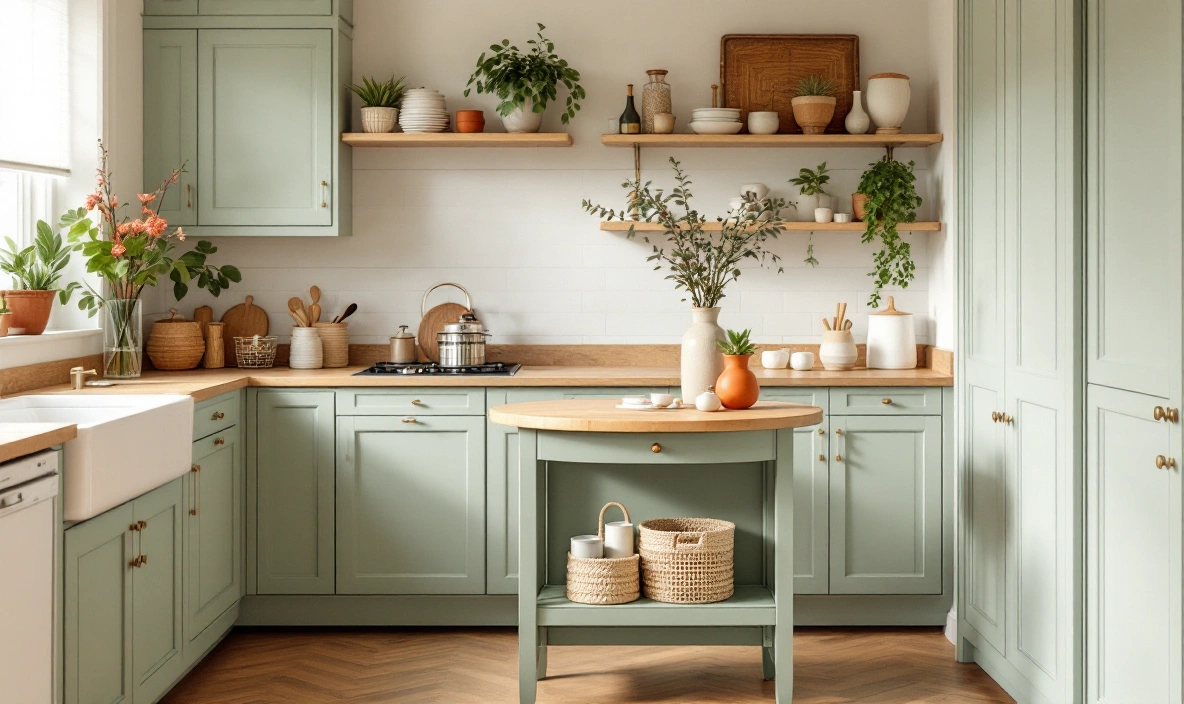
A round or oval small island for the kitchen is easier to walk around
A round or oval island has no corners to catch a hip or bump a knee. That matters in a tight walkway, where every inch of clearance counts. These shapes work well in oddly shaped rooms, where a rectangular island would leave awkward space on one side.
Rectangular islands give more usable counter length
A rectangular island fits more straight counter length into the same square footage than a round one. That matters if the island's main job is prep space, or seating along one long edge. It works best in a room with a clear, rectangular gap to fill. A rectangular island squeezed into an odd space usually wastes more floor room than it saves in counter length.
Fixed islands are more stable, movable islands are more flexible
A fixed island bolts to the floor, with plumbing or wiring run to it. It's sturdier for daily heavy use. It can also support a sink or cooktop built in.
A movable island on locking wheels gives up some of that stability. But you can push it against a wall or into another room when you need the floor space back. That helps if your small kitchen sometimes needs to host more people than it comfortably fits.
Match the size to your actual clearance, not the room's total square footage
It's easy to size an island based on the room's total floor area. What actually matters is the clearance left around it once it's in place. Aim for at least 36 inches of open walkway on every side that isn't backed by a wall or counter. That is the minimum walkway in the National Kitchen and Bath Association (NKBA) planning guidelines. That number should drive the island's size, not the room's total square footage.
Consider a cart if even a small island for the kitchen won't fit
Maybe your kitchen can't spare 36 inches on every open side. Then a rolling cart gives you some of the same benefit. You get extra counter space, sometimes storage, without permanently claiming floor space. It's a smaller commitment, so you can try it before deciding a fixed island is worth the space.
Who this guide is for
This guide is for someone shopping for a small kitchen island. It helps you pick the shape and type that fits your room, not just the one you like the look of. For ideas on what the island should do once it fits, see our kitchen island ideas for small kitchens guide.
Questions people also ask
What shape island fits a small kitchen best?
Round or oval, in most tight or oddly shaped rooms, since there are no corners to bump into while walking past.
Should a small kitchen island be fixed or on wheels?
Movable, if your floor space needs change often. A fixed island is sturdier but claims the space for good, while a movable one can be pushed aside or into another room.
How much clearance does a small kitchen island need?
At least 36 inches of open walkway on every side the island doesn't back onto a wall or counter. That number should set the island's size, not the room's total floor area.